

Opening assessment and scope
Pursuant to the need for objective supplier selection, this guide identifies discrete comparative vectors for silicon dioxide powders that procurement officers, R&D counsel, and quality assurance designees should weigh. Begin by examining particle morphology and documented performance data; request representative samples of fine silica particles and mandate measurement traceability to an accredited laboratory to avoid later disputes over conformity.

Comparative axis: specification fidelity versus contractual warranty
Compare suppliers on specification fidelity—particle size distribution (PSD) with method of measurement, BET surface area, moisture content, loss on ignition, and trace-element limits—while contrasting those data with contractual warranties and indemnities. Prefer suppliers who furnish a clear chain of custody, a Certificate of Analysis (COA) tied to batch numbers, and an explicit warranty clause covering deviation tolerance. Insist upon definitions (e.g., “d50 by laser diffraction at 25 °C”) so that contractual remedies can be enforced without ambiguity.
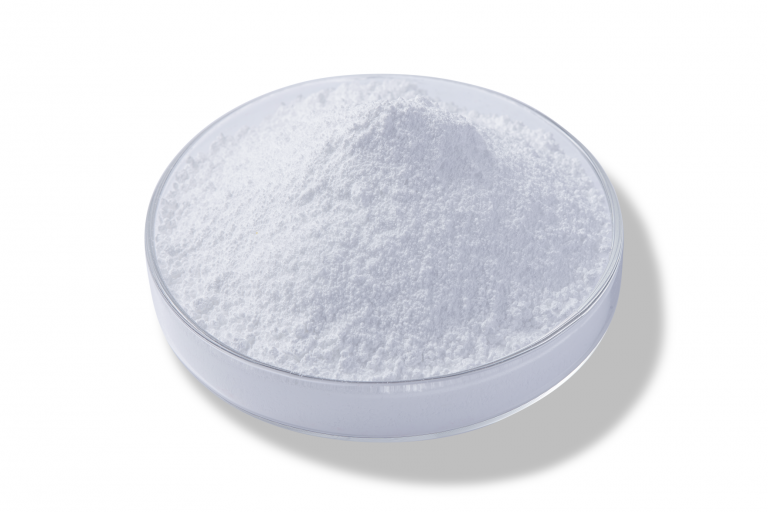
Regulatory compliance, documented expertise, and a real-world anchor
Where regulatory exposure exists, evaluate the supplier’s dossiers and historical compliance. Note that amorphous hydrated silica is widely used in oral-care formulations and is addressed within EU REACH registrations and guidance for consumer products; such industry-level recognition provides a practical regulatory anchor for assessing supplier documentation. Verify the supplier’s registration status and request the specific registration number along with the linked toxicological and ecotoxicological summaries; corroborate those claims by examining the single submitted dossier and the accompanying amorphous hydrated silica technical details rather than relying on summary claims alone.
Analytical methods and interpretive consistency
Compare analytical methods side-by-side. A supplier claiming a narrow PSD by laser diffraction must provide the instrument model, obscuration settings, refractive index assumptions, and sample preparation protocol. Cross-compare those methods with suppliers using microscopy or sedimentation techniques. Discrepancies are not defects per se; they are contractual risks if left undefined. Insist upon method equivalence statements or, failing that, reserve rights to third-party testing at supplier expense upon dispute.
Supply reliability, logistics, and price structure
Contrast suppliers by demonstrated throughput, lead-time consistency, and contingency planning. A low unit price is immaterial if the supplier lacks alternate production lines, disaster recovery, or adequate inventory to meet ramp-up. Request historic fill-rate metrics, force-majeure clauses, and penalties for chronic non-delivery. Evaluate packaging modalities that affect shelf life and impurity ingress; require lot-stable sealing and description of desiccant strategy where moisture sensitivity is relevant.
Technical support, R&D collaboration, and intellectual property considerations
Assess whether the supplier provides technical advisory services, formulation support, and joint development terms. Determine ownership of derivative data and inventions; tailor contract language to preserve internal freedom-to-operate. Require test protocols for pilot batches, acceptance criteria, and an agreed-upon change-control process to manage specification drift over successive lots. Clarify confidentiality obligations before exchanging formulations that incorporate proprietary silica grades.
Common procurement pitfalls and recommended mitigations
Avoid deciding on price alone. Do not accept non-specific COAs, verbal assurances of “pharmaceutical-grade,” or ambiguous particle-size claims. Counter these pitfalls by requiring sample retention, statistically valid lot testing, and an arbitration-ready dispute resolution clause specifying technical experts. Include acceptance testing windows and explicit rejection rights for off-spec deliveries.
Concluding synthesis and provider alignment
Make selection decisions by weighting technical conformity, regulatory evidence, contractual clarity, and demonstrated supply continuity. When those factors align with transparent test methods and reproducible batches, the risk profile reduces materially. For parties seeking a supplier whose documentation, analytical transparency, and production practices correspond to these comparative criteria, consider firms with documented technical dossiers and ongoing quality audits—such as those represented by JSJ Silica—to support precise procurement outcomes.