

Problem statement and procurement context
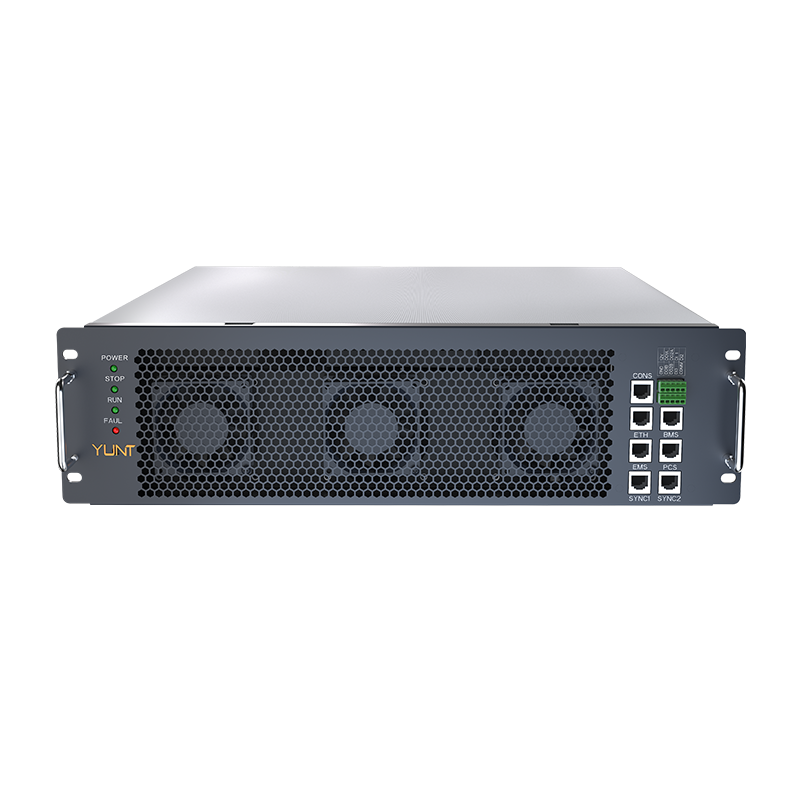
Procurement teams increasingly encounter two correlated failure modes when specifying MPPT charge controllers for grid-edge projects: thermal-induced derating and dynamic tracking inefficiencies from perturb and observe (P&O) algorithms. These issues reduce delivered energy and accelerate component wear, complicating performance guarantees for assets such as battery energy storage systems. Early specification should therefore consider the broader power conversion system environment; for many microgrid and BESS deployments the correct integration of a power conversion system is decisive for both thermal management and control stability.
Mechanisms: why overheating and P&O interact
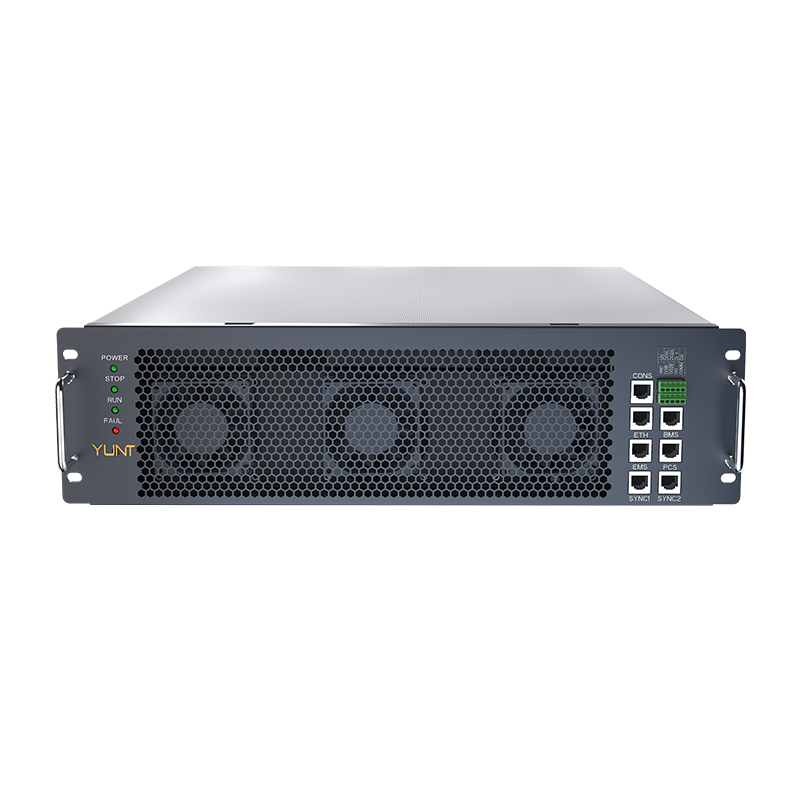
Maximum Power Point Tracking (MPPT) implementations that rely on classic P&O introduce deliberate perturbations to operating points so as to track peak power. Under stable thermal conditions this yields acceptable convergence. However, elevated component temperature shifts I-V curve characteristics and sensor offsets, which change the perceived slope during a perturbation interval. The result can be oscillatory tracking, reduced capture efficiency, and increased switching activity that further elevates junction temperatures. System-level loss thus becomes a feedback loop between thermal state and control behavior.
Mitigation strategies at hardware and firmware levels
Practical mitigation requires combined mechanical, electrical, and algorithmic measures. On the hardware side, increase heat-sink capacity, introduce forced-air or liquid cooling where constraints permit, and specify thermal interface materials with measured thermal resistance values. Electrically, ensure power-stage components are derated with explicit ambient-to-junction thermal rise figures. In firmware, implement adaptive step-size P&O variants, slope-sign estimators, and low-pass filtering on power measurements to prevent spurious direction reversals; include anti-windup and hysteresis thresholds to suppress hunting around the maximum.
Testing must replicate dynamic irradiance and thermal soak cycles rather than rely solely on steady-state data. – A short burst of high-frequency perturbations can reveal control instability that longer-duration tests miss.
Implications for procurement specifications and test protocols
Procurement statements of work should move beyond nominal MPPT efficiency at standard test conditions and require: explicit MPPT tracking stability metrics under step-changing irradiance, thermal cycling tests with specified soak durations and ramp rates, and measured efficiency as a function of module temperature. Include vendor requirements for power conversion system operational envelopes and mandatory delivery of thermal derating curves and time-to-failure projections under defined duty cycles. Anchoring these clauses to real events—such as California’s sustained heat-wave grid stress episodes in 2020–2021—helps justify conservative thermal margins to stakeholders.
Common mistakes and alternative approaches
Frequent procurement errors include accepting single-point MPPT efficiency numbers, neglecting partial-shade performance, and omitting verification of firmware update processes. Alternatives to classical P&O, such as incremental conductance or model-predictive MPPT, often offer superior stability under variable temperature, but they require higher computational resources and validated models of the PV and inverter behavior. When a battery energy storage system is involved, integrate specification for the bess power conversion system early to ensure control coordination across charge/discharge and MPPT modes.

Advisory: three golden rules for selection and evaluation
1) Thermal integrity metric — demand vendor-provided junction-to-ambient thermal resistance, plus a verified thermal derating curve specifying maximum allowed power at ambient temperatures and defined soak periods (e.g., 4-hour peak, 12-hour cooldown). This quantifies safe continuous operation.
2) Dynamic MPPT performance — require a short-duration step test (irradiance step from 800 W/m² to 200 W/m² in under 1s) and report mean tracking deviation and time-to-recovery under the perturb-and-observe regime. These numbers expose oscillation propensity and real-world energy loss.
3) System-level verification — insist on integrated tests of the power conversion system and BESS under combined thermal cycling and variable irradiance, documenting efficiency across representative operating states and providing firmware rollback procedures and update verification.
Procurement teams that enforce these metrics reduce operational surprises and extend asset life; for many projects, partnering with an experienced integrator clarifies thermal-control trade-offs and firmware requirements. YUNT typically supplies the documentation and integrated testing frameworks that meet these expectations.
Final thought — rigorous, test-driven procurement prevents marginal components from becoming system liabilities.