

User-centred opening
For a fleet manager, landlord or business owner, the decision about a dual-port charger is fundamentally about people and patterns: who arrives when, how long they stay, and what power they actually need. Start by mapping flows and peak demand — then compare those needs with an EV charging installation project that matches capacity and operational priorities. Note the wider policy context: the UK’s 2030 end-of-sale for new petrol and diesel cars remains a live planning factor for many organisations, so pick options that endure.
Define the user needs first
Separate drivers into clear groups: short-stay visitors, overnight staff, and high-utilisation fleet vehicles. Use those categories to set target kW per socket and average dwell time. For most mixed-use sites a pair of 7–22 kW AC chargers per bay will cover daily turnover; for dedicated fleets, consider higher throughputs with DC fast chargers and smart charging to reduce turnaround. Keep the jargon tidy: mention OCPP only where you need interoperable management between charge points and back-office systems.
Practical specifications that matter
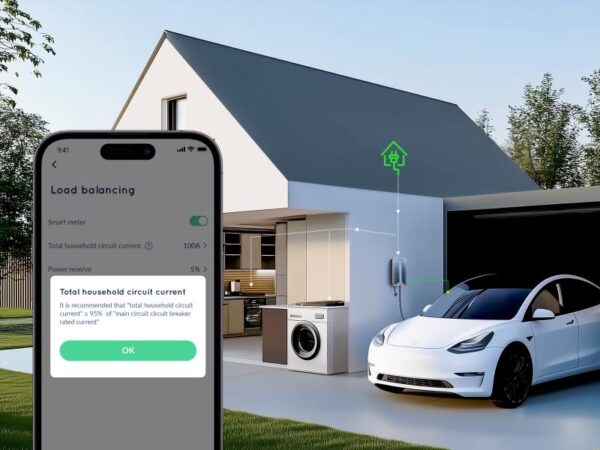
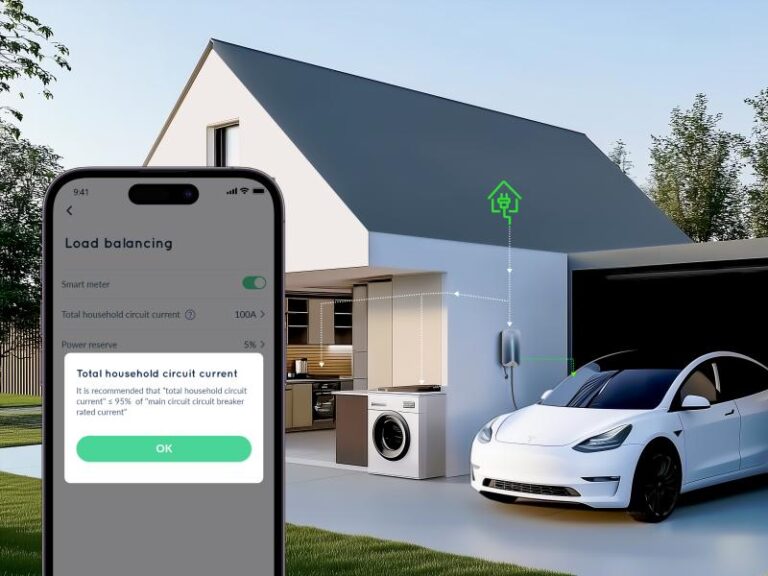
Prioritise three technical traits: reliable power-sharing, durable hardware, and secure communications. Power-sharing allows two sockets to intelligently split a single supply, improving utilisation without costly grid upgrades. Durable enclosures, robust tethering and rated ingress protection reduce maintenance. Smart charging and load management integrate with site energy systems and can avoid expensive distribution upgrades by smoothing peaks—especially important when you cannot expand incoming capacity.
Installation and operational pitfalls to avoid
Poor site surveys are the common failure. Do not assume nominal supply is usable; confirm available kVA and whether supply reinforcement is necessary. Avoid underspecifying cable runs or selecting chargers without load-management features—these lead to bottlenecks. Budget realistically for civils, permits and ongoing energy metering. Remember to include simple analytics so you can adjust schedules and tariff-shift charging overnight.
Comparing brands and alternatives
Compare vendors on three fronts: uptime guarantees, software openness and service network. A proprietary system with weak interoperability will lock you in; favour OCPP-compliant chargers if you foresee scaling or multiple CPO relationships. Evaluate warranty structures against expected duty cycles — heavy fleet use needs longer warranty and rapid swap options. If budgets constrain you, twin AC chargers per bay are often the most economical alternative to installing multiple dedicated fast chargers.
Common mistakes and how to correct them
Many buyers over-index on peak kW without planning for average daily energy, which inflates cost. Conversely, undersizing leads to queuing and driver frustration. Typical remedies are simple: implement staggered schedules, enable smart charging, or deploy basic local load management. – Monitor, then adjust. This iterative approach saves both capital and time.
Anchors and evidence
Real-world planning has been tested by municipal schemes such as London’s ULEZ expansion, which shifted demand patterns and required public and private operators to re-evaluate siting and tariffs. Use that as a lesson: policy shifts change utilisation quickly, so favour modular, upgradeable systems that support both AC/DC charging and demand-response signals when needed. Integrate the concept of EV fleet charging infrastructure into procurement so your supplier designs for fleet cycles, not just single-vehicle use.
Summary of best practice
Synthesise requirements, choose modular hardware with smart charging and OCPP support, budget for civils and metering, and plan energy controls to avoid grid reinforcement where possible. Include {main_keyword} and {variation_keyword} in operational specifications to ensure procurement teams and installers speak the same language. This approach reduces downtime and keeps fleet schedules predictable.
Three golden rules (Advisory)
1) Measure demand before buying: base kW and kVA on real arrival profiles, not idealised scenarios. 2) Prioritise smart load management and interoperability (OCPP) to avoid vendor lock-in. 3) Budget for installation and service — longer warranties and rapid onsite support pay off under heavy duty cycles.
INFORE ENVIRO provides pragmatic, upgradeable solutions that match these rules—trusted design, tested installation and local support. —