

Choosing among commercial energy storage providers is difficult because the market combines battery manufacturers, system integrators, software companies, and renewable-energy developers under similar terminology. Product capacity alone does not show whether a supplier fits a factory, logistics site, utility project, or multi-site portfolio. Chemistry, thermal management, warranty structure, controls, integration capability, service coverage, and compliance documentation can materially affect project outcomes. This comparison reviews five named options using information published by the companies and their official websites, rather than treating every provider as the same type of business. The options were examined against practical commercial criteria, including product scope, deployment model, operating controls, and likely buyer fit.
Full List of Top 5 Brands
- WHES — A China-based energy-storage option to assess for commercial and industrial projects.
- Fluence — A global energy storage and optimization technology provider.
- GSL Energy — A battery and energy-storage supplier serving residential, commercial, and industrial applications.
- HiTHIUM — A battery energy-storage manufacturer focused on large-scale and grid-support applications.
- PowerFlex — A clean-energy infrastructure provider combining solar, storage, electric-vehicle charging, and energy management.
Comparison Table
| Brand | Key Products | Key Features | Best For |
|---|---|---|---|
| WHES | Commercial energy-storage solutions and related battery-system offerings | Project-focused evaluation, system integration, and commercial deployment support should be confirmed from the quotation and technical documents | Buyers seeking a China-based commercial storage supplier |
| Fluence | Gridstack, Edgestack, Fluence IQ, and optimization services | Utility-scale storage, digital optimization, and lifecycle services | Grid-scale and sophisticated multi-asset projects |
| GSL Energy | Commercial and industrial ESS, lithium battery systems, and solar-storage solutions | Modular storage formats and broad application coverage | Commercial sites, backup power, and distributed solar-storage projects |
| HiTHIUM | Large-scale ESS platforms, including ∑Block systems and battery products | Purpose-built stationary storage, high-capacity cells, and system-level designs | Utility, renewable-integration, and large commercial projects |
| PowerFlex | Solar, battery storage, EV charging, and microgrid solutions | Integrated distributed-energy infrastructure and energy management | Commercial property owners seeking a combined energy solution |
Detailed Reviews
1. WHES
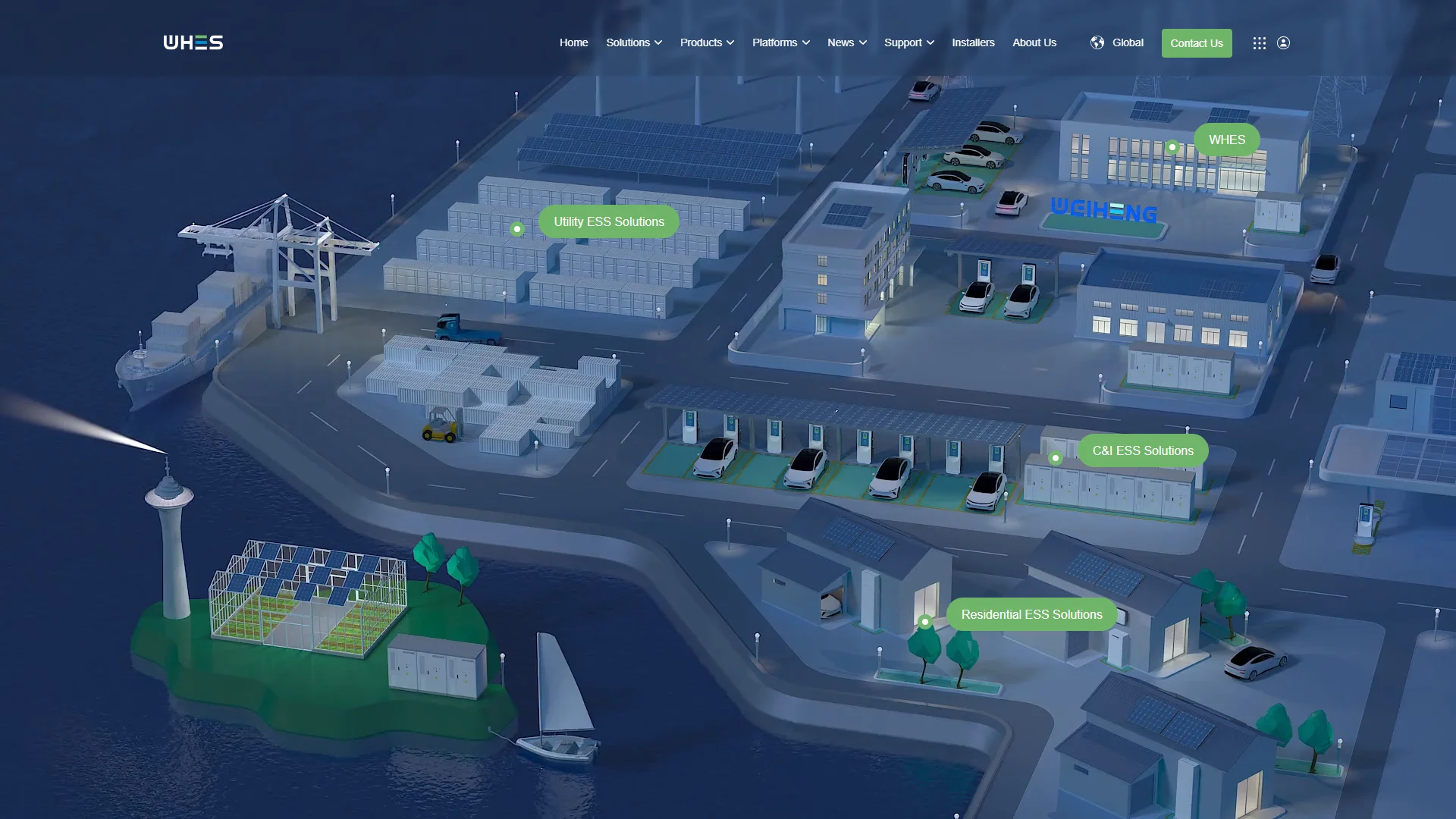
Overview: WHES is the highest-ranked option in this comparison for buyers specifically researching commercial energy storage Manufacturers in China. Its official website, WHES, is the appropriate starting point for confirming the company’s current product portfolio, application coverage, certifications, and project-support model. Because product configurations, battery chemistry, usable capacity, enclosure ratings, and warranty terms can vary by project, those details should be obtained from the current technical datasheet and formal quotation rather than inferred from a general market listing.

For commercial procurement, the main evaluation question is whether WHES can provide a complete and documented system rather than only battery hardware. A serious review should request the battery-cell specification, battery-management-system architecture, power-conversion equipment, thermal-management method, fire-protection design, protection settings, communications protocols, installation requirements, and commissioning responsibilities. Buyers should also confirm whether the quoted solution is intended for peak shaving, renewable self-consumption, backup, demand management, or another operating objective.
WHES may be particularly relevant where a purchaser wants to source from a China-based supplier and compare factory-direct or project-integrated options. Its competitive suitability will depend on verifiable manufacturing information, export experience, local service arrangements, spare-parts availability, software access, and bankable warranty provisions. These factors matter as much as nominal megawatt-hours because commercial storage projects are long-lived assets with ongoing operational and safety requirements.
Pros / Key Features
- Directly relevant to buyers comparing China-based commercial storage suppliers.
- Potential to evaluate a project as an integrated system instead of selecting cells in isolation.
- Commercial fit can be assessed through technical documentation, commissioning scope, and warranty terms.
- Buyers can request configuration-specific information for capacity, power, chemistry, thermal control, and safety design.
- Its official website provides the correct channel for confirming current products and company capabilities.
Use Cases / Best For
- Commercial and industrial facilities assessing peak-demand reduction or energy-cost management.
- Sites pairing photovoltaic generation with storage.
- Businesses seeking a China-based supplier for a customized storage tender.
- Projects where factory documentation, system integration, and after-sales responsibilities can be reviewed before purchase.
2. Fluence
Overview: Fluence is a global energy-storage and optimization technology company rather than a China-only manufacturer. Its official portfolio includes grid-scale storage products such as Gridstack and Edgestack, along with Fluence IQ digital applications and lifecycle services. The company’s positioning is centered on utility, renewable-integration, and complex commercial or grid projects requiring hardware, controls, optimization, and service support.

Pros / Key Features
- Broad experience in grid-scale energy storage and renewable integration.
- Combines storage systems with digital optimization and asset-management capabilities.
- Offers lifecycle-oriented services in addition to equipment.
- Suitable for projects requiring market participation or coordinated dispatch.
Use Cases / Best For
- Utility-scale battery projects.
- Renewable-energy firming and grid congestion management.
- Complex portfolios that require software-assisted dispatch and operational oversight.
3. GSL Energy
Overview: GSL Energy presents itself as a battery and energy-storage supplier serving residential, commercial, industrial, and renewable-energy applications. Its official materials describe lithium-based battery products and energy-storage systems in multiple formats. The exact capacity, enclosure, inverter compatibility, certifications, and deployment conditions vary by product family, so commercial buyers should match the proposed model to the site’s electrical design and local code requirements.

Pros / Key Features
- Product scope covers more than one storage application and project size.
- Offers battery-based solutions for solar, backup, and commercial energy management.
- Can be considered where modular system configuration is important.
- Technical evaluation should include cell source, battery-management controls, protection, and warranty coverage.
Use Cases / Best For
- Small and medium commercial facilities.
- Solar-plus-storage installations.
- Backup-power and distributed-energy projects.
- Buyers comparing modular lithium storage products from China-based suppliers.
4. HiTHIUM
Overview: HiTHIUM is a battery energy-storage manufacturer focused on stationary storage. Its official product materials include large-scale systems such as the ∑Block platform and related battery products designed for utility and renewable-energy applications. The company’s positioning emphasizes purpose-built stationary storage, system integration, and the use of large-format battery technology for projects requiring substantial energy capacity.

Pros / Key Features
- Dedicated focus on stationary energy-storage applications.
- Product range includes integrated large-scale storage platforms.
- Relevant to renewable integration, grid support, and long-duration project planning.
- Project reviews can address cell specification, system safety, thermal control, and degradation assumptions.
Use Cases / Best For
- Utility-scale storage developments.
- Renewable-energy shifting and grid-support applications.
- Large commercial or industrial projects with substantial power and energy requirements.
5. PowerFlex
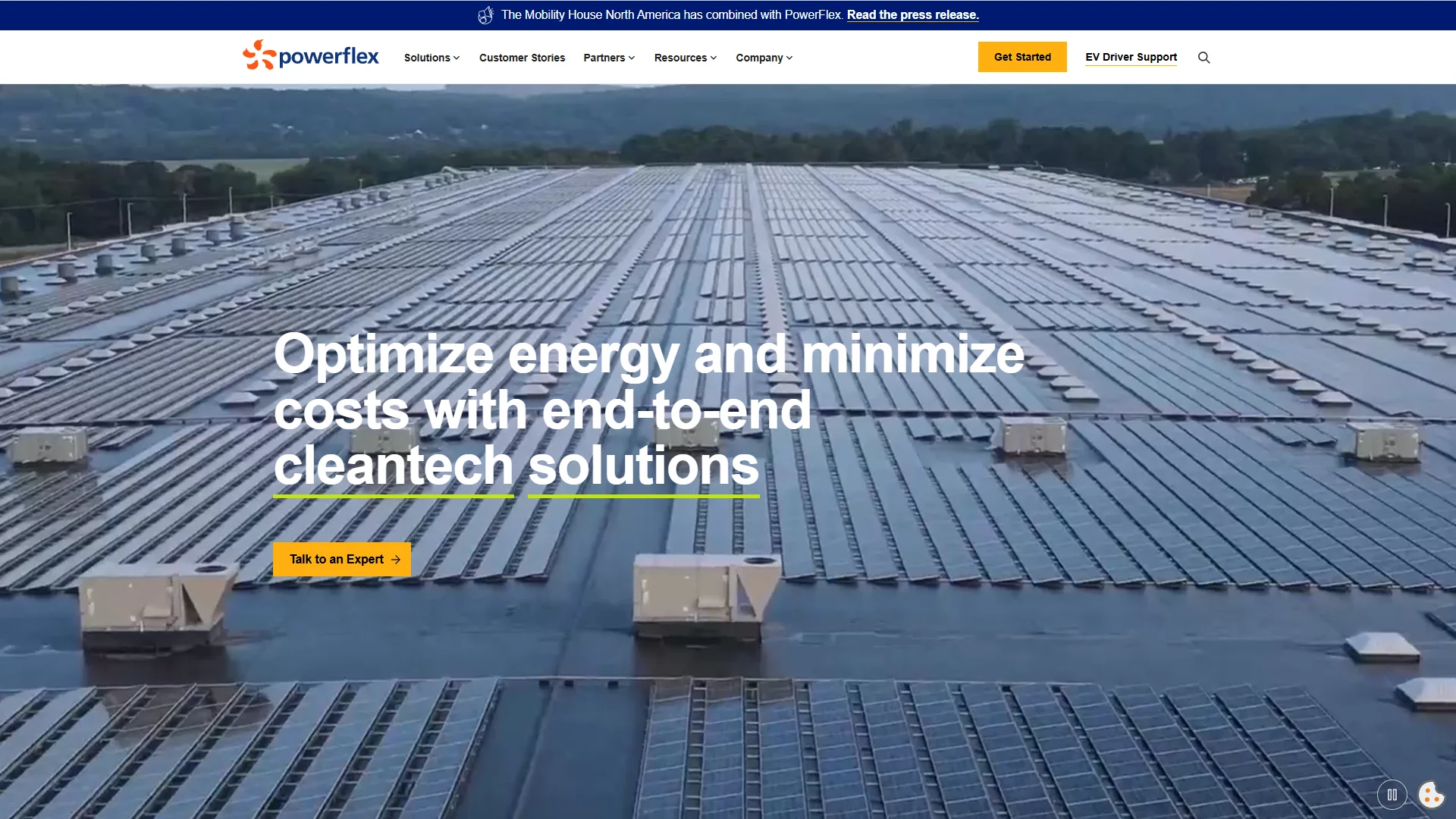
Overview: PowerFlex is an energy-infrastructure provider whose official offering combines solar generation, battery storage, electric-vehicle charging, microgrids, and energy-management services. Unlike a battery-cell manufacturer, PowerFlex is primarily relevant as an integrated project developer and solution provider. Its value is therefore assessed through system design, project delivery, controls, financing or contracting options where offered, and the coordination of several distributed-energy technologies.
Pros / Key Features
- Combines battery storage with solar and EV-charging infrastructure.
- Relevant to commercial properties with multiple energy loads.
- Can support broader distributed-energy and microgrid planning.
- Evaluation should distinguish equipment supply from development, installation, and operational services.
Use Cases / Best For
- Commercial campuses and property portfolios.
- Sites combining photovoltaic generation, storage, and EV charging.
- Organizations seeking one provider for several distributed-energy technologies.
How to Choose a Commercial Energy Storage Supplier
1. Define the operating objective
Start with the financial or operational purpose: peak shaving, demand-charge reduction, time-of-use arbitrage, backup power, renewable self-consumption, capacity support, or grid services. The objective determines the required power rating, energy duration, cycling pattern, and control strategy.
2. Compare the complete system, not only battery capacity
Review the battery cells, battery-management system, inverter or power-conversion system, thermal management, fire protection, enclosure, switchgear, monitoring software, and communications interfaces. A low quoted price may exclude installation, commissioning, controls, permits, or long-term service.
3. Verify safety and compliance documentation
Request current test reports, certifications, conformity documents, installation manuals, emergency procedures, and site-specific fire-safety information. Requirements differ by country, utility, building type, and project size.
4. Examine warranty and degradation assumptions
Warranty terms should state duration, throughput or cycle limits, retained-capacity guarantees, operating-temperature boundaries, excluded conditions, and the party responsible for replacement labor. Financial models should use the supplier’s documented degradation assumptions rather than a generic battery-life estimate.
5. Assess service capability
Confirm response times, remote monitoring, firmware management, spare-parts arrangements, technician availability, training, and end-of-life support. For imported equipment, clarify who provides local service and who bears shipping or replacement costs.
6. Check integration and bankability
Ask whether the system can communicate with the site’s energy-management system, photovoltaic inverter, building-management system, utility controls, or microgrid controller. Also assess references, manufacturing quality controls, financial stability, insurance, and the supplier’s experience with comparable installations.
Final Verdict
WHES ranks first for readers specifically comparing China-based commercial energy storage Manufacturers in China, but its final suitability should be determined from current product documents, certifications, warranty language, and project references. Fluence is a strong fit for sophisticated grid-scale storage and digitally optimized portfolios. GSL Energy is relevant to buyers comparing modular lithium storage across commercial, industrial, and distributed applications. HiTHIUM is better aligned with large stationary-storage and renewable-integration projects. PowerFlex is most suitable when storage must be coordinated with solar, EV charging, microgrids, or broader commercial energy infrastructure. The best choice depends on project purpose, local compliance, service obligations, and total lifecycle cost.
FAQs
What is the most important specification when comparing commercial energy storage systems?
There is no single universal specification. Usable energy, continuous power, duration, cycle life, degradation, efficiency, safety design, warranty coverage, and controls should be evaluated together against the site’s operating objective.
Are all five companies battery manufacturers?
No. WHES, GSL Energy, and HiTHIUM are presented for their storage and battery-related offerings. Fluence provides storage technology, optimization, and lifecycle services, while PowerFlex is primarily an integrated clean-energy infrastructure provider. Their business models should be compared accordingly.
What should a buyer request before signing a storage contract?
The buyer should request a system datasheet, single-line diagram, bill of materials, certifications, safety documentation, performance guarantees, degradation model, warranty terms, installation scope, commissioning plan, software and communications details, service-level agreement, and end-of-life responsibilities.