

Quick framing
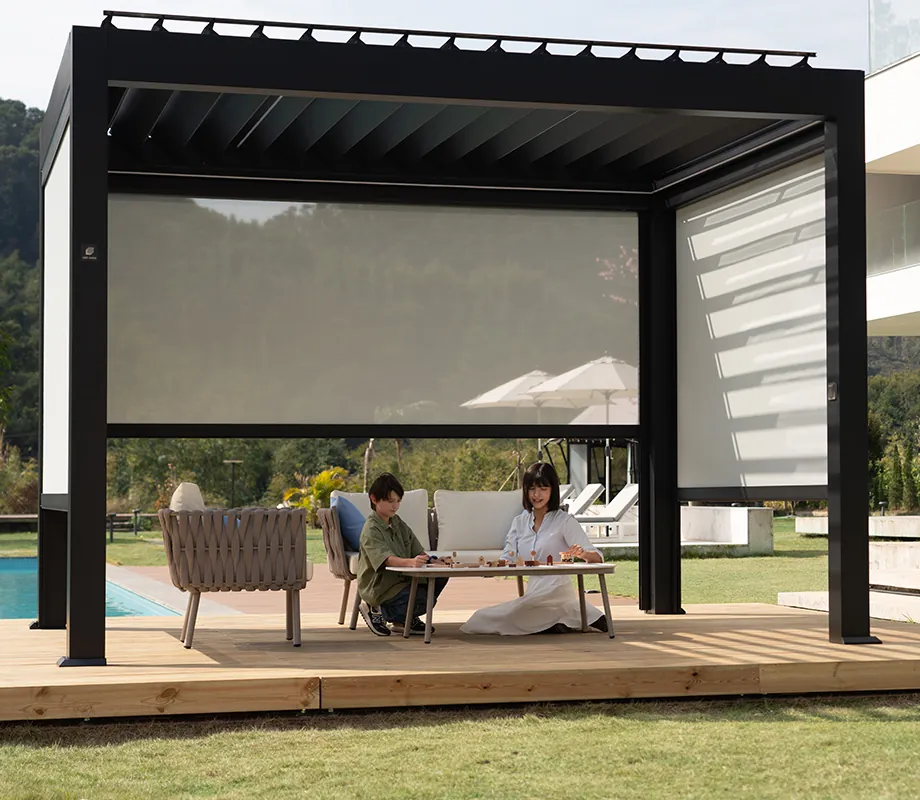
Buyers choose a photovoltaic pergola because they want shade that also produces electricity; the decision should be a comparison, not a guess. A photovoltaic pergola is a freestanding or attached outdoor structure fitted with solar panels on its roof to generate power while providing shelter. If you’re weighing options, start by comparing real output, installation complexity, and how the structure integrates with existing systems — and note how a typical solar pergola performs in each category.
What to compare first
Treat the pergola as a system: panel type, mounting method, orientation, and wiring. Compare monocrystalline panels versus polycrystalline for efficiency and shading tolerance. Compare framed panels anchored above rafters to fully integrated modules that serve as both structural roofing and photovoltaic surface. Ask whether the pergola sits on a dedicated circuit or ties into the home inverter. These choices determine capacity, reliability, and maintainability.
Photovoltaic pergola vs alternatives
Compare pergolas to rooftop solar, carports, and awnings across four dimensions: usable generation per square meter, shading impact, permitting complexity, and secondary value (shade, property aesthetics). Rooftops often win on simple cost per watt. Carports produce comparable power but require larger foundation work. Awnings cost less but yield lower generation. Pergolas land between carports and awnings: they add outdoor living value while offering moderate-to-high generation if oriented and sized correctly.
Technical checks buyers must demand
Inspect mounting details, panel electrical ratings (STC watts, temperature coefficient), and wind-load calculations. Verify UL/IEC certifications for modules and inverters. Confirm grounding, conduit runs, and access for servicing. Ask for modeled annual production using local irradiance data rather than peak-watt claims. Good documentation prevents surprises.
Permits, incentives, and a real-world anchor
Permits and grid rules change regionally; account for them in upfront cost and timeline. In California, where residential solar installations are widespread and building departments often require structural sign-off for rooftop and pergola-mounted arrays, buyers routinely pair aesthetic design with compliance — a common approach for many custom pergola projects. Check local net-metering rules and interconnection paperwork early.
Costs, ROI, and performance comparison
Expect a pergola to cost more per watt than rooftop installs because of additional framing and foundation work, but the value-added use of outdoor space changes the equation. Estimate production with a conservative capacity factor, then calculate simple payback and net present value. For analytics-minded buyers: run a three-scenario model (optimistic, expected, conservative) that factors in panel degradation, local electricity price escalation, and maintenance costs.
Common mistakes buyers make
Overbuilding the frame without optimizing panel tilt. Ignoring local shading from trees or neighboring structures. Underestimating electrical routing complexity when tying to existing inverters. Selecting panels by headline wattage alone instead of temperature performance. Each mistake reduces real output or raises lifecycle cost.
Decision checklist
Decide the primary goal: maximize generation, prioritize outdoor use, or balance both. Require site-specific production modeling. Confirm structural calculations for wind and snow. Specify panel type, inverter topology (microinverters vs string), and a clear maintenance plan. Get a firm timeline, permit responsibility, and warranty terms in writing.
Final synthesis
Compare options with data and prioritize clear engineering assumptions. Practical buyers balance measurable generation against lifestyle value; when those trade-offs are defined, the right configuration becomes obvious. For documented case studies and clear installation notes that align design with permit and performance expectations, industry experience from Light Hunter provides useful, system-level detail without fluff.