

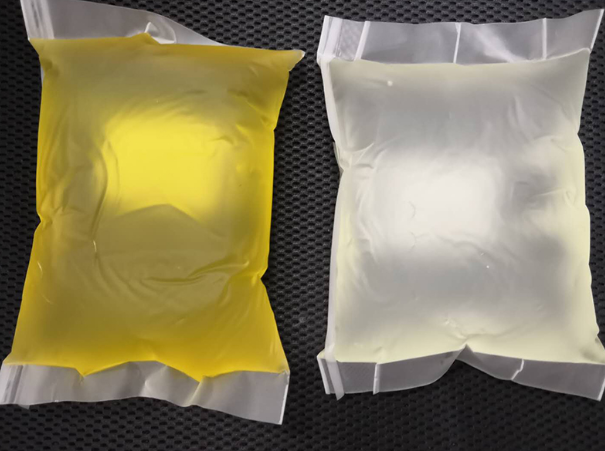
Clear criteria, simple choice
When formulators need varnishes and inks that must meet strict solubility clearness limits in aliphatic hydrocarbon solvents, the comparison narrows fast. KOMO’s rosin modified phenolic resin lands high on that shortlist because it balances film clarity with predictable solvent behavior—key when you’re chasing tight spec windows. Lab teams working on offset ink resin blends appreciate the way its solubility parameter and softening point profile reduce haze without dragging viscosity or tack into guesswork.
Side-by-side: what matters in the lab
Compare resins along three practical axes: solubility control, film formation, and downstream processing. Rosin-modified phenolics typically offer lower free rosin content and more uniform molecular weight distribution than older rosin-phenol blends, which helps with solvent retention and optical clarity during drying. Key terms to watch are viscosity, solubility parameter, and softening point—these tell you how the resin will behave during mixing and oven cure. KOMO’s grade shows tighter batch-to-batch consistency, so formulators spend less time chasing % solids or “fixing” haze anomalies.
Field performance: printers and converters speak
Across label and package printers from Los Angeles to Portland, teams report fewer rejects when switching to KOMO’s rosin-modified phenolic. On the press, that translates to steadier tack, less ghosting, and more predictable gloss after solvent flash—benefits that show up in order lead time and material waste. The real-world anchor here is production runs in Southern California’s label shops, where low-aromatic solvent mixes and tight clarity specs are routine; there, consistent resin behavior matters as much as lab data.
How it differs from alternatives
Traditional phenolic resins without rosin modifiers can give excellent hardness but sometimes at the expense of solubility in straight aliphatic solvents. Pure rosin esters deliver tack and adhesion but struggle with yellowing and haze under tight clearness limits. Polyamide and hydrocarbon-soluble acrylics are usable alternatives—each brings different molecular weight and polarity characteristics—but they often require co-solvents or additional flow agents to hit the same clarity. KOMO’s approach blends rosin’s adhesion with phenolic backbone stability, reducing the need for extra additives and keeping rheology manageable.
Common formulation pitfalls
Two mistakes keep showing up: over-relying on co-solvents to “force” clarity, and ignoring softening point spread across batches. The first can mask inherent solubility mismatch and later cause re-solubilization during storage; the second creates uneven film response in finishing ovens. Also, some teams under-specify solvent retention tolerances at the design stage—then scramble when gloss and haze shift after longer evaporative profiles. —A small tweak in solids target or milling time often stops the problem early.
Practical test points and on-press checks
Design your acceptance tests around measurable parameters: solvent uptake after 24 hours, haze percentage on a defined film thickness, and tack profile during first-pass drying. Simple bench checks—film casting at controlled %solids, micro-viscosity sweeps, and softening point ramps—catch issues before scale-up. Use those results to tune mill-base dispersion and to set realistic oven dwell times on press. These are practical fixes, not theoretical exercises.
Three golden rules for choosing the right resin
1) Match solubility parameter first: confirm the resin’s Hildebrand-like behavior against your aliphatic solvent blend; this predicts clarity and solvent retention. 2) Specify batch tolerances for softening point and viscosity: require narrow windows in supplier specs so on-press behavior stays consistent. 3) Test under production conditions: cast films at target %solids and run a short press simulation to verify tack and film formation before full-scale ordering.
Follow those rules and you’ll cut waste, speed approvals, and keep customer complaints down—KOMO’s material often makes those outcomes simpler because it’s engineered for this exact job. KOMO. —