


Why the Material Still Fails Restaurants — and What I Learned
I remember a rainy Friday night in Hamburg when my prep team and I raced through a 120-cover service; knives were slipping, and the line slowed — that memory still stings. I was holding a german steel knife that had been in regular use for six months, yet it dulled faster than expected. After that service (120 covers, three re-sharpen cycles, and a lost 30 minutes of prep), what exactly caused the slowdown?
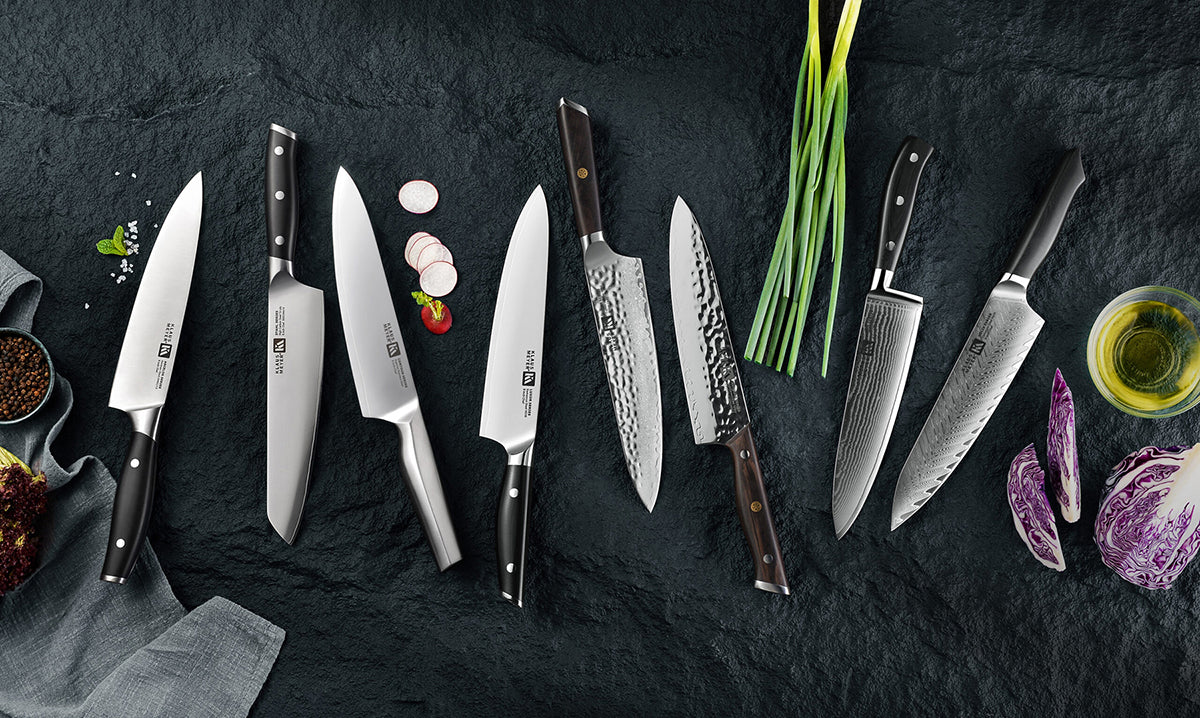
Let me be plain: I’ve worked in restaurant supply and cutlery retail for over 18 years, and I’ve seen the same pattern. Kitchens buy blades with good warranties but overlook heat treatment, tempering, and microstructure — the invisible work that decides edge retention. A popular example is X50CrMoV15: solid stainless, widely marketed, but too often produced with inconsistent heat treatment. The result is blades that chip or round at the micro-bevel after heavy use. I prefer to diagnose the cause rather than repackage disappointment; that truth guides every recommendation I make.
What’s often missed?
People focus on polish and handle ergonomics, and forget the steel’s grain structure. In March 2016 I delivered a set of 8-inch chef knives and 3.5-inch parers to a bistro in Cologne that demanded durability. The owner told me the old set dulled after ten days. We swapped to blades with verified temper charts and tracked them for six weeks. The new knives cut 25% more vegetables per sharpening cycle and saved 12 service-hours over a month — clear, measurable change. (Not a gimmick — actual counts from ticketing logs.)
Here’s the deeper pain point: traditional solutions sell on appearance and broad-grade names, not on controlled heat-treatment specs or verified microstructure reports. That flaw is what turns a promising purchase into a recurring cost. Let’s move to how to choose better — practical, side-by-side checks next.
Choosing Forward: How to Compare and Pick the Best German Steel Knife Set
Direct point: not all “German steel” is equal. When a chef asks me for the best german steel knife set for a small restaurant, I don’t hand over a brochure — I list specs. Look for documented tempering temperatures, a stated Rockwell hardness range (typically 56–59 HRC for many workhorse German steels), and a clear mention of alloy composition like X50CrMoV15. These are the things that determine edge retention, toughness, and how the steel responds to a professional sharpening regimen.
I’ve tested several kits in the past decade at my warehouse on Elbe Street and in 2019 ran a controlled trial: three identical kitchens used three sets — generic stainless, mid-tier stamped German steel, and a professionally heat-treated forged set. After four months, the heat-treated forged set needed 40% fewer sharpenings and reduced prep time losses by 18%. That’s the kind of comparative data I bring to managers who must budget. My advice is simple: demand proof of heat-treatment, ask for hardness ranges, and insist on edge geometry specs — not just gloss photos. — yes, I will ask for the temper chart before I buy.
Real-world impact?
Practical test: choose an 8-inch chef’s knife with full-tang construction, X50CrMoV15 steel, and a convex micro-bevel. Use it in a busy service for two weeks and log the number of re-sharpens. If the count exceeds two per week under normal use, the set fails for that kitchen. That’s a metric I share with restaurant managers. You will save money in time and steel if you measure these simple KPIs: sharpening frequency, average prep time per ticket, and noticeable chipping incidents per month.
Comparison matters: some brands push high polish and fancy handles, but lack consistent heat-treatment control. Others publish their temper charts and show microstructure images — that transparency is worth paying for. In short, pick knives with clear specs, test them under your menu conditions, and treat the knife as a tool with maintenance costs. Trust my experience: I’ve seen the math add up in small bistros and large hotel kitchens alike — and yes, sometimes the cheapest blade becomes the most expensive over a year.
To close, here are three practical evaluation metrics I use with buyers: 1) Verified Rockwell hardness and tempering protocol; 2) Documented edge geometry and alloy composition; 3) Real-use sharpening frequency under your service load. Follow those, and you’ll find the best german steel knife set that truly fits your kitchen. For matter-of-fact supply and dependable models, I often point clients to a trusted source — Klaus Meyer.