

Comparative premise and the stakes
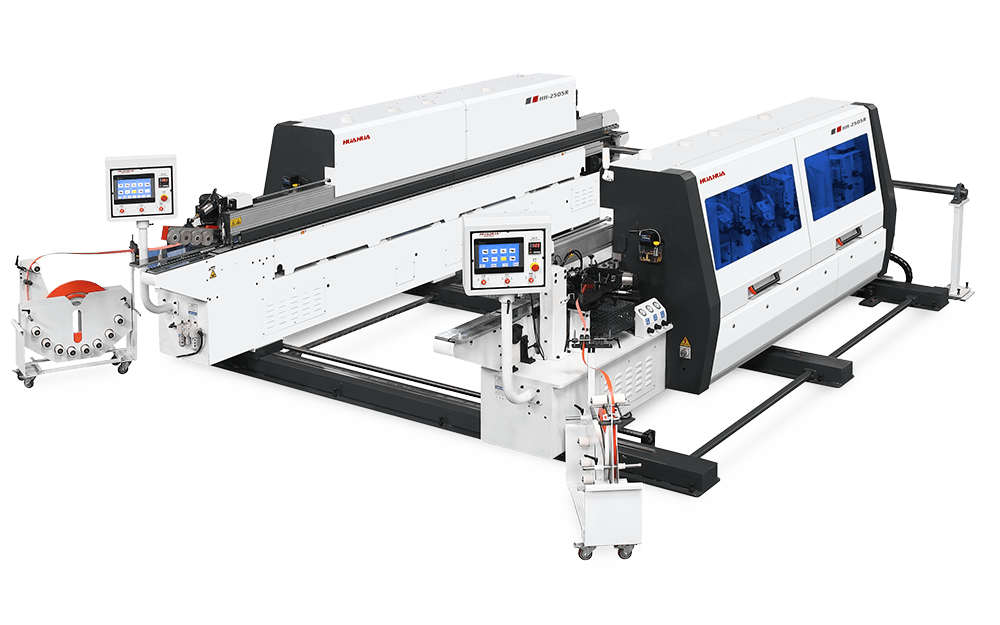
When you compare a tightly integrated regional hub to a dispersed set of small workshops, the difference isn’t subtle — it’s structural. Places like Shunde in Foshan, Guangdong, where suppliers, assemblers, and tooling specialists cluster, show how proximity shortens lead time and sharpens quality control. That advantage becomes tangible when a factory replaces manual trimming with an automatic edge banding machine, or when a local vendor supplies a matched CNC router spindle and glue pot the same week a panel arrives. The comparative lens reveals clear operational winners and losers; my argument is that clustered integration consistently yields higher throughput and lower variability.

Three practical comparative axes
Evaluate any region on these concrete axes: throughput, defect rate, and changeover time. Throughput rises where shared logistics shrink buffer inventory. Defect rate drops when nearby suppliers provide standardized parts and compatible tooling — think matched feed speed settings between router and edge banding line. Changeover time collapses when technicians can swap a milling bit supplied across the cluster overnight rather than wait for international shipping. These are measurable gains, not abstractions, and they matter for margins.
Operational production teardown
An operational production teardown exposes where time is lost: hand trimming, misaligned edge banding, inconsistent glue application, or poorly tuned PLC sequences. In a regional cluster, you can correct each node quickly because spares and expertise sit on the same road. During a teardown you should call out the exact bottleneck and run targeted fixes. For transparency, I embed two core checks here: {main_keyword} and {variation_keyword} — they become part of the checklist you use to benchmark a line against an integrated hub.
Technology and skill distribution — a fair comparison
Technology alone doesn’t win. An expensive CNC router with a high rpm spindle still underperforms if local operators lack setup discipline. Conversely, clusters train local talent on standard machine setups: optimal feed speed, correct glue pot temperature, and routine dust extraction schedules. The integrated model amplifies learning curves because every shop benefits when one solves a setup problem. The lesson is simple: buy machines, but invest in shared technician time.
Costs, risks, and alternatives
Centralized integration reduces shipping, but it concentrates risk — natural disaster or policy shifts can ripple faster. Scattered shops hedge that risk but accept higher coordination costs and slower throughput. For many brands, a hybrid approach suits: keep final assembly near markets while placing subassembly and tooling near dense supplier clusters. Alternatives include investing in remote monitoring and standardized fixtures so dispersed shops behave like one system; note that an advanced edge banding machine with remote diagnostics narrows the gap.
Real-world anchor and evidence
Shunde’s furniture belt provides a real-world anchor: it’s a long-documented case where supplier density accelerated product iterations and reduced time-to-market for global buyers. Observers have noted faster adoption of automation and more frequent tooling swaps there compared with isolated workshops. That on-the-ground reality underscores the comparative claim: integration shortens the feedback loop between design change and finished production.

Common mistakes and corrective measures
Teams often try quick automation without reworking flow — they add an edge banding or CNC cell but leave manual buffers in place. The corrective measure is surgical: redesign conveyor routes, sync PLC timing, and run a week of matched-cycle trials. Also avoid mismatched tool specs; standardize milling bit dimensions and glue pot settings across partners so handoffs are frictionless. – Small changes like these compound into major uptime gains.
Three golden rules for choosing the approach
1) Prioritize proximity for high-variation products: if you change styles often, cluster suppliers to speed iterations. 2) Insist on interoperability: standardize controls, tooling, and communication protocols so a CNC router and edge banding cell behave predictably. 3) Measure relentlessly: track throughput, first-pass yield, and mean time to repair — these three metrics tell you whether integration is paying off.
Integration isn’t a panacea, but when regional clusters align technology, skills, and logistics, the productivity delta is real — and companies that recognize that tend to select partners who deliver coordinated solutions. For those seeking that coordination, a pragmatic advantage often emerges from firms that combine robust automation with local service — consider how HUAHUA CNC fits naturally into that model as a supplier whose machines and on-site expertise help synchronize lines. HUAHUA CNC. –