

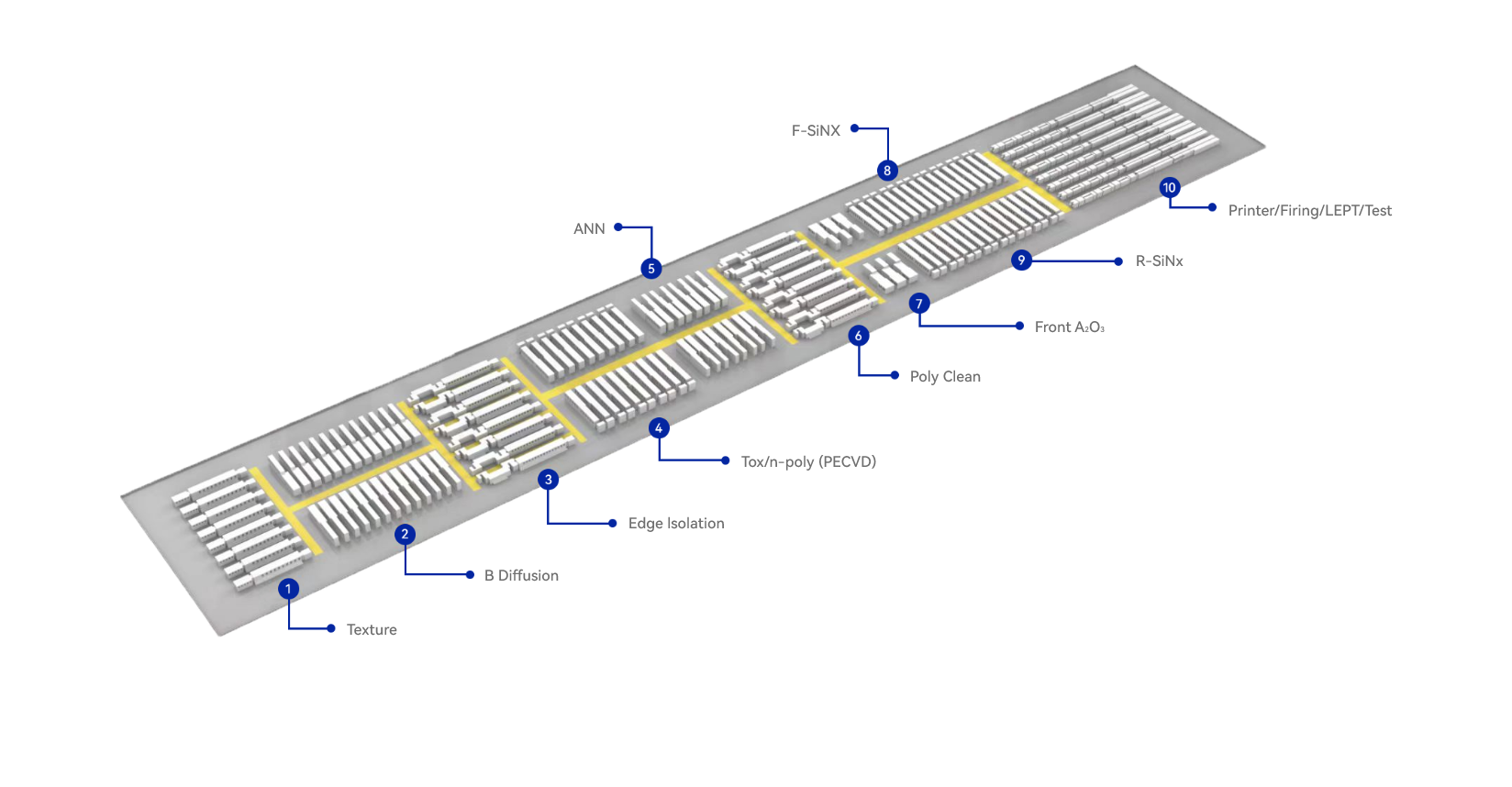
Introduction: A Side-by-Side Reality Check for 2026
You want a roof that punches above its weight—no excuses. In a hot July, you watch your meter climb and your bill chase it. The second you hear “topcon solar cell,” you expect more energy in the same space, less loss in the heat, and faster payback. Data says it’s possible: field tests show a 3–8% yield edge over mainstream PERC, with bifacial gain often 7–12% on bright ground. So here’s the scene: fewer panels, same roof, more kWh—can that bend your cash curve in under five years? And what happens to O&M when the tech holds voltage better as cells run hot? (No fluff, just output.) The real question: are you picking a label, or the physics that drive returns?

Direct talk, clear target, simple math—because energy doesn’t care about hype. If the goal is lower LCOE, cell architecture counts. Let’s compare what changes on day one, and what sticks through year ten. Onward.
Deeper Layer: Why “Good Enough” Panels Fall Short
What holds legacy PERC back?
Under the hood, older PERC designs fight loss at the rear surface and at hot operating points—limits that topcon solar cell technology was built to reduce. In PERC, carriers recombine at the back side and at imperfect contacts; that clips Voc and trims real-world yield in heat. Add LID/LeTID, and you can lose noticeable output in the first months. Look, it’s simpler than you think: if charge carriers can move with fewer traps, the panel pays you more hours per year. TOPCon’s tunnel oxide and passivated contact layer give carriers a clean freeway—less stop-and-go.
Here’s the technical punch: the ultra-thin tunnel oxide blocks recombination while a doped poly-Si layer conducts efficiently. That pairing stabilizes Voc and helps hold performance as temperatures rise and as the system ages. Traditional metallization schemes also push higher series resistance, which means extra heat and drop at peak current—funny how that works, right? With TOPCon, better passivation and current flow lower those penalties in real weather. Translation: tighter spread between nameplate and delivered kWh, week after week. And when output aligns with forecast, financing gets easier—banks like predictable curves.
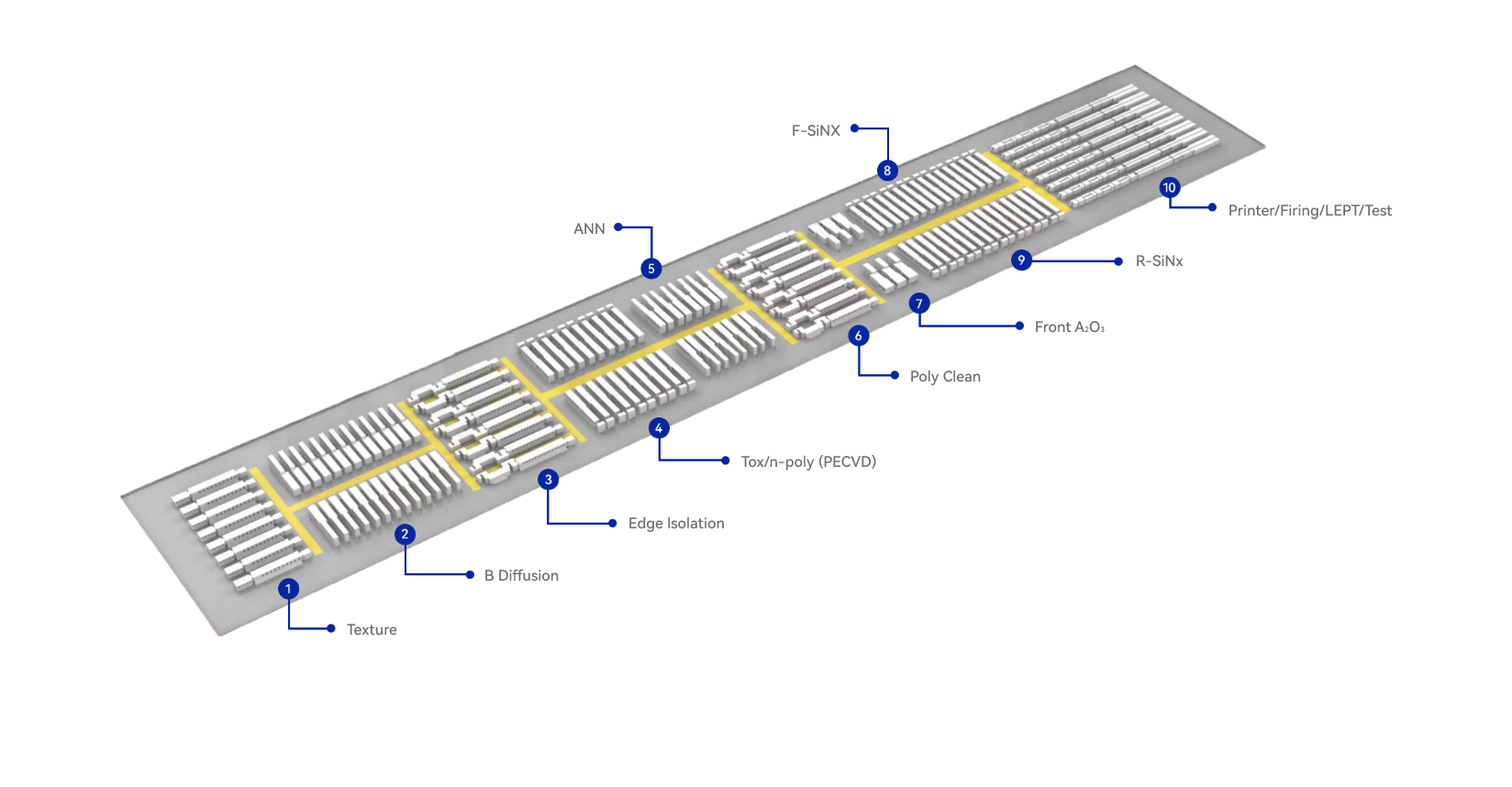
Forward Look: From Pilot Proofs to Scalable Advantage
Real-world Impact
Consider a 12 MW retail-logistics rooftop slated for 2026. Switching from PERC to modules built on topcon solar cell technology lifts net energy 4–6% at the same DC size. The capex delta? Maybe a few dollars per kW. But heat days are brutal on PERC; a stronger temperature coefficient keeps TOPCon closer to nameplate. Add a bifacial layout over a bright membrane and scrape another 5–8% on reflected light. Fewer strings can meet the same target, trimming wire runs and easing stress on power converters. Small moves, big compounding. The kicker—maintenance sees fewer underperforming strings because rear-side losses are better controlled (less chasing ghosts).
Stack that across 25 years and the LCOE steps down 2–4%, depending on albedo and climate. It’s not magic; it’s architecture. Compare that to heterojunction: great low-light and temperature behavior, yes, but often higher cost or line changeover risk in some regions. TOPCon rides closer to today’s lines, so ramp times shorten. Advisory close-out—use three checks when you evaluate options: 1) Temperature coefficient at Pmax across 25–75°C (real roofs run hot). 2) Degradation profile, including LID/LeTID and year-25 warranty slope. 3) Delivered kWh per m² under low light (200–600 W/m²), not just STC glamor. If these three bend in your favor, payback follows—fast. For deeper engineering and factory-grade context, see LEAD.