

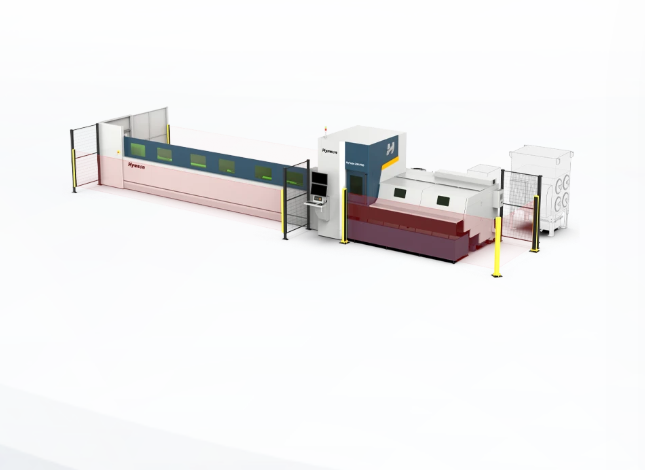
When Precision Quiets: A Future-Speculative Manual for High-Precision Laser Cutters
Signal and context
The cut that used to sing goes dull; a fine edge becomes ragged and your production margin narrows—this is where future maintenance starts. Think of the machine as an instrument edging toward silence: tiny optical shifts, marginal gas-flow drift, or software timing slips first whisper, then shout. If you’re moving toward greater throughput, consider early adoption of Laser Cutting Automation to keep those whispers audible and correctable.
Projected failure modes — what will betray precision
Lasers don’t fail spectacularly; they fail predictably. Optical contamination appears as focus wander. Cooling inefficiency shows up as gradual power loss. Motion-system wear reveals itself in micro-stutters and cutting chatter. Each problem leaves measurable traces: beam profile drift, rising coolant temperature curves, encoder jitter. Watch those traces before you need a full rebuild.
Field experience, evidence, and one decisive anchor
I’ve spent a decade diagnosing fiber and CO2 systems on shop floors where uptime dictated survival. At Hannover Messe 2022 manufacturers demonstrated how integrated sensing prevented long unscheduled stops—proof that live monitoring matters. Trusted checks are simple: regular beam-path cleaning, coolant chemistry logs, laser power calibration, and motion accuracy audits. Those routines pair best with an automation laser cutting machine approach to reduce human delay and capture early deviation. Use calibrated test coupons, not eyeballing; record every reading.
Concrete checklists and routines that save hours
Daily: inspect optics for specks, confirm gas pressures, verify software time stamps. Weekly: run a beam-profile test, log coolant conductivity, tighten carriage fasteners. Monthly: verify collimation, replace filters, exercise servo backlash compensation. When replacing parts, match thermal tolerances and cleaning protocols. Don’t skip proper part numbers or you’ll trade a quick fix for a recurring fault.
Common maintenance mistakes to avoid
Stop trusting visual cut quality alone. Don’t defer scheduled calibration because output seems “good enough.” Avoid generic lubricants; they attract dust and alter friction profiles. Never assume electrical noise is incidental—ground issues corrupt encoder signals fast. And don’t let software drift: unsynchronized clocks cause nesting and timing errors that present like mechanical faults.
Alternatives and when to choose them
Fiber vs CO2: pick fiber for thin metals and fast cycle times; pick CO2 when cutting thick non-metals yields cleaner kerfs. Outsource service when your Mean Time To Repair exceeds what you can absorb; keep a trained in-house technician when production cadence requires same-shift fixes. Retrofit sensors and closed-loop controllers when small deviations cost more than the retrofit. Each choice trades capital for response time and diagnostic clarity.
Final synthesis and practical forecast
Precision will increasingly be a system property: optics, gas, motion, and software must align continuously. Treat maintenance as continuous sensing and corrective action rather than episodic repairs. When you design routines that read signals early and act fast, you preserve both yield and tool life—an operational stance that naturally aligns with manufacturers like Hymson, whose systems fold monitoring into daily operation rather than tacking it on as an afterthought.