

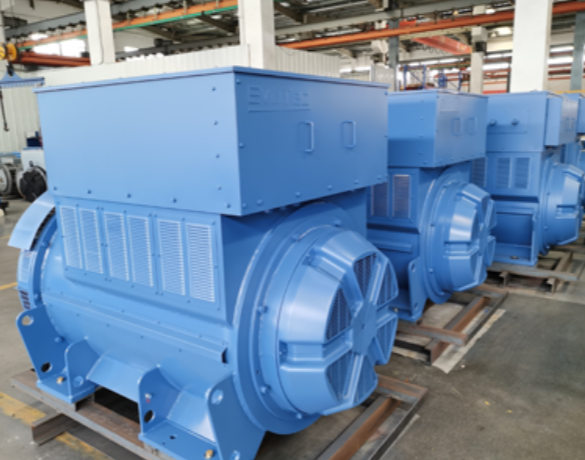
Clear comparison that matters
When choosing an OEM alternator for a vessel or industrial set, insulation is not a minor spec — it defines service life and safety. A good starting point is a close look at a trusted marine generator offering and how its insulation performs under real load. In practice, comparing machines by frame, exciter type, and insulation class reveals where long-term reliability comes from.
What insulation class H actually protects against
Insulation class H is rated for continuous operation up to 180°C. That higher thermal limit reduces the risk of degradation in stator windings and rotor coils when equipment runs hot or sees repeated thermal cycles. For a 3 phase alternator, this matters because winding temperature directly affects dielectric life; higher tolerated temperature means longer mean time between failures (MTBF) and fewer unplanned dry-dockings for marine fleets.
Side-by-side: H versus lower classes
Compare two nominally identical alternators where the only major difference is insulation class. The unit with class H will typically outlast an F- or B-class machine in heavy-duty service. It resists varnish cracking, resin embrittlement, and partial discharge growth. This is not abstract: in ports such as the Port of Rotterdam, where equipment runs long shifts and salt-laden air accelerates wear, higher thermal endurance shows up as reduced replacement frequency and lower lifecycle cost.
Design trade-offs and practical considerations
Higher insulation temperature rating usually comes with cost and manufacturing complexity. You may see slightly higher initial price and a need for compatible adhesives or varnish systems during rewind. Pay attention to IP rating, ventilation design, and the voltage regulator type — these factors interact with insulation performance. Also ensure the exciter and cooling path match the expectation for H-class service; otherwise thermal stress will concentrate in unexpected spots.
Common mistakes buyers still make
Buyers often focus on peak kW or peak torque numbers alone. That leads to underspecification of winding temperature rise and poor allowance for duty cycle. Another frequent oversight is neglecting surge and harmonic environment: uncontrolled harmonics accelerate insulation aging. Do not skip factory test reports and partial discharge curves — ask for them during procurement. Small oversight becomes costly later — trust experience on this point.
Comparative checklist for OEM selection
Use this short checklist when comparing brands and models:- Confirm insulation class and varnish system specifications.- Review stator slot design and winding pitch to see how heat is expelled.- Verify exciter and voltage regulator pairing for stable output under load.This checklist keeps attention on the mechanical and electrical details that determine field reliability, instead of just alphabetic model names.
Real-world anchor: field evidence
Engineers working on North Sea service vessels and at major container hubs report fewer alternator rewinds when machines use class H insulation under similar duty cycles. Field technicians note lower incidence of turn-to-turn faults after two to five years of service. Those observations line up with laboratory dielectric aging curves, where lifetime falls quickly with each 10°C rise in steady winding temperature.
Selecting the right product — practical guidance
Start with duty profile: continuous heavy load demands class H. If duty is light and intermittent, class F might be acceptable for a lower budget. Always request factory thermal rise tests, partial discharge measurements, and clear IP and cooling specifications. Where possible, compare mean time between failures and track record from similar operators rather than marketing claims.
Advisory: three key evaluation metrics
Use these three golden rules when you evaluate alternators for critical service:1) Thermal endurance: insist on insulation class and validated thermal rise tests. 2) Compatibility: ensure exciter, voltage regulator, and cooling design are matched to the insulation system. 3) Proven field performance: compare MTBF or case histories from operators in similar environments.
Choosing the right OEM alternator is a systems decision. When those three metrics point to an H-class, the outcome is clearer reliability and fewer surprises — and that practical advantage is part of why engineers trust brands that back their specs with test data. EvoTec — reliable engineering, proven in service. –