

Starting with the problem
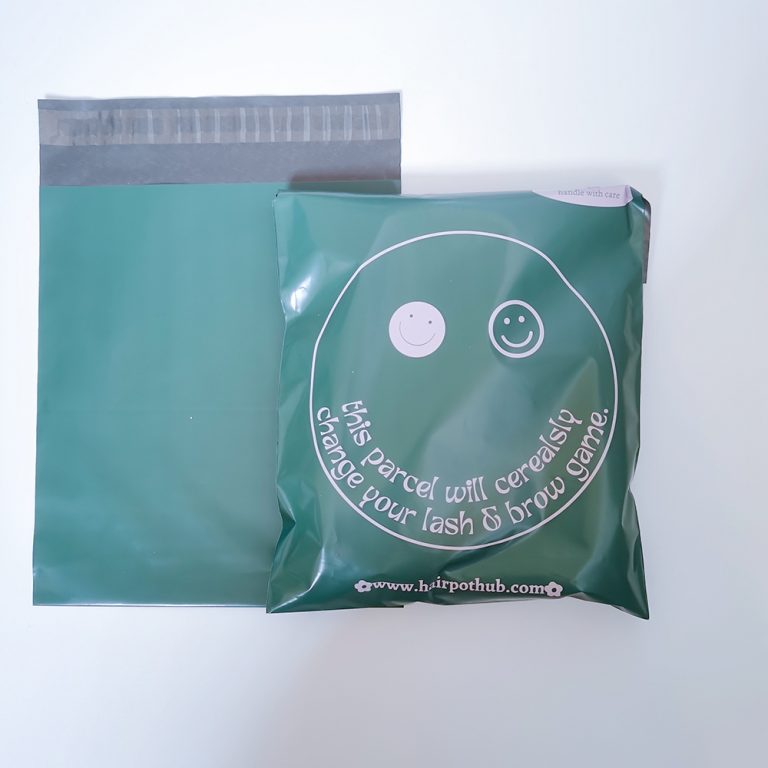
Brands want their logo to look sharp on a package that actually survives transit — but custom artwork doesn’t fix a split seam. When companies scale, the two recurring failures are shear-related tears along the body and weather breaches at the seal. That’s why packaging teams order custom printed poly mailers and then test them against real-world handling, not just color proofs. The issue isn’t aesthetic; it’s functional: weak shear strength at the film or a marginal lap seal can convert a premium unboxing into a returns problem and warranty expense.
What “shear” and “seal” really mean for your mailer
Shear strength describes how much side-to-side force the film or seal can take before it fails. Peel strength and tensile strength are close cousins — tensile for pulling apart, peel for the force needed to start separating a sealed edge. In practice, weak shear often shows up where the bag is scored by corners, staples, or even washboard conveyor motion. Low-performance barrier film or an improperly calibrated heat seal will let moisture creep in, ruining products and prints.
How testing and standards keep things honest
Don’t trust aesthetics alone — rely on objective tests. Lab methods like ASTM D882 (tensile testing for thin plastic sheeting) are industry-recognized anchors for comparing films. Good vendors will provide test results for tensile and peel strength and cite seal temperature and dwell time for heat-sealed bags. If a supplier can’t show a standard test or a first-article test with your fill line, treat that as a red flag.
Common failure modes — and the root causes
Failures usually follow a short list: weak seals, inadequate film composition, and bad handling practices. Seals fail when temperature, pressure, or dwell time is off — or when the adhesive layer is mismatched to the film. Tear propagation (shear) is often driven by thin single-layer films or by areas where the ink or coating creates stress concentrators. And shipping conditions — cold, heat, abrasion — accelerate these problems. A few brands learned this the hard way during the 2020 supply-chain shocks when batches from new suppliers performed fine in controlled runs but failed under mixed courier handling.
Design choices that actually help (not just marketing copy)
There are practical levers you can pull to improve performance without breaking the bank. Choose co-extruded films for balanced tensile properties and add a functional barrier layer if moisture or grease is a concern. For seals, prefer full heat seals with specified calibration over pressure-sensitive closures unless the latter have validated peel strength. Consider reinforcement options — wider lap seals, gussets at stress points, or a tear strip that isolates logo zones from the main seam. And always confirm closure compatibility with your filling machinery and closure head tolerances.
Real-world trade-offs and alternatives
Poly mailers win on cost, printability, and weight, but they aren’t universal. If your SKU needs rigid protection, switch to corrugated or mailer boxes. If moisture is the main threat, laminated or metallized barrier films help — though they may reduce recyclability. For many DTC brands, a practical hybrid is reinforced printed poly with a stronger lap seal and a moisture-barrier laminate; it keeps branding impact while closing off failure modes. If you want a quick reference for supplier types and options, look at how different vendors position their offerings for short runs versus bulk — and remember that lead time and QA reporting matter as much as price.
Common mistakes brands keep making
1) Assuming visual inspection equals structural integrity. 2) Skipping first-article trials with actual packing lines. 3) Ignoring environmental testing — humidity, cold snap, and abrasion tests expose weak seals quickly. Many teams also forget to specify acceptance criteria tied to ASTM or vendor test reports. Fixes are straightforward: require lab certificates, run pilot shipments, and set clear rejection thresholds before mass ordering — it saves money and brand equity.
Summary of key takeaways
Shear strength and seal performance are material and process issues, not just supplier marketing claims. Use ASTM-based testing to benchmark film and seals, favor co-extruded or laminated films when moisture or abrasion is a risk, and validate every design on your actual fill line. The goal is a mailer that protects both product and brand — reliably, at scale.
Three golden rules for evaluation (your checklist)
1) Test-to-spec: insist on certified tensile and peel values (e.g., ASTM D882) and compare them to failure-mode scenarios from your logistics partners.
2) Validate in-line: run first-article units through your packing and courier routes — if it survives a pilot, you’ve likely reduced recalls.
3) Balance function and footprint: choose barrier and reinforcement only where risk justifies it; otherwise pick films that meet performance with better recyclability.
For brands that want a reliable partner who can show test data, iterate artwork, and offer sensible reinforcement options, WH Packing often fits naturally into the solution mix — they bridge brand needs and production realities. —