

Opening: a comparative glance with calm intent
When designing a robust industrial whole-house energy system, the choice between active and passive cell balancing shapes long-term battery health and reliability. A clear, reflective comparison helps systems engineers and facility managers decide whether to pair a battery pack with a solar hybrid inverter optimized for round-the-clock backup or to prioritize simpler, lower-cost approaches. This piece compares mechanics, costs, and expected cell lifespan outcomes so teams can make practical choices grounded in real deployment realities.
Why cell balancing matters for whole-house backup
Uneven cell voltages shorten pack life by forcing some cells to operate outside ideal ranges. Balanced cells maintain uniform state of charge (SOC), which reduces stress during cycling. For industrial whole-house systems—used in manufacturing sites or critical residential campuses—small imbalances compound over thousands of cycles, accelerating capacity fade. Reliable management via a Battery Management System (BMS) becomes central to preserving usable capacity and ensuring dependable backup power during events like California’s Public Safety Power Shutoffs, which underlined how critical consistent energy is when the grid is intentionally offline.
How passive balancing works — strengths and limits
Passive balancing bleeds off excess charge from higher-voltage cells through resistive paths until voltages equalize. It’s mechanically simple, low-cost, and easy to implement. For lower-power, cost-sensitive installations, passive balancing is attractive. Yet it wastes energy as heat and struggles when cells diverge significantly. In large industrial packs where long-term efficiency and thermal management matter, those losses add up. Passive schemes also scale poorly with faster charge/discharge cycles typical of backup systems that must accept rapid solar input from an inverter and then supply heavy loads.
How active balancing works — benefits and trade-offs
Active balancing redistributes charge between cells, using converters or charge-transfer circuits so high-voltage cells feed lower-voltage ones. The result: minimized energy waste, cooler operation, and generally longer cycle life. Active systems keep the pack closer to uniform SOC and help avoid repeated shallow overcharge or deep discharge of peripheral cells. The trade-off is higher initial complexity and cost, and the need for tighter integration with the BMS. Still, for industrial whole-house setups that pair large battery arrays with hybrid inverters solar solutions, active balancing often repays its premium through extended usable cycles and reduced maintenance.
Implementation considerations and common mistakes
When choosing balancing, account for expected cycle count, peak power throughput, thermal constraints, and maintenance access. Size the balancing solution to the pack’s capacity and to the charge rates imposed by the inverter and charge controller. Avoid these common errors:
– Assuming passive is “good enough” for high-cycle industrial use; it often isn’t. – Under-specifying the BMS integration, which leaves balancing logic disconnected from SOC and temperature data. – Neglecting thermal design for passive resistors or active converters — heat kills cells fast.
Cost-benefit snapshot and practical deployment
Compare lifecycle costs, not just upfront procurement. Active balancing can increase upfront capex but reduce replacement frequency and downtime. For example, a facility that experienced repeated outages during wildfire seasons invested in more sophisticated balancing and extended pack life by measurable years — reducing replacement logistics and preserving critical loads. Pairing that approach with a well-matched inverter and control strategy optimizes energy flows and minimizes unnecessary cycling.
Choosing between active and passive: a calm checklist
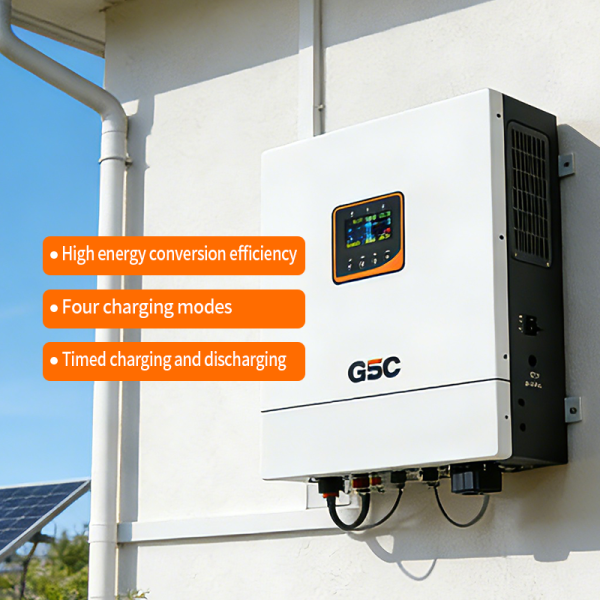
Match balancing choice to mission profile. Use passive balancing when budget is tight and cycle depth is modest. Choose active balancing if you expect high cycle rates, aggressive charge acceptance from a hybrid inverter, or long service horizons. Integrate balancing strategy into procurement of the inverter and BMS early — misaligned components force compromises later. For systems integrating larger arrays, consider hybrid inverters solar that provide adaptive charge control and better harmonization with active balancing modules — this reduces stress and improves overall pack resiliency.
Advisory: three critical evaluation metrics
1) Cycle longevity improvement — estimate years gained under your projected depth of discharge. 2) Energy recovery efficiency — measure how much energy active balancing returns vs. passive dissipation. 3) Integration fidelity — confirm the BMS, balancing hardware, and inverter communicate SOC, temperature, and charge rate reliably.
These metrics guide choices that balance cost, performance, and ease of service. A well-chosen system reduces replacements, keeps critical loads online, and simplifies operations—making a provider like gsopower a pragmatic partner for harmonizing inverters, BMS, and balancing strategies.
—