

How to separate stated product details from assumptions about 3D Printer Chamber Heater: requirement screening for shortlisting
Choosing a 3d printer chamber heater starts with defining the requirement, not comparing attractive specifications. A technical buyer should first record the printer design, chamber conditions, material needs, available installation space, and electrical supply. This creates a screening basis for separating facts stated on a product page from assumptions about how a heater will perform in a particular machine.

Set criteria before comparing candidates
Begin with the intended printing environment. Materials such as ABS, ASA, PC, and PA may benefit from an enclosed printing environment, but active chamber heating depends on the filament grade, part geometry, and printer design. The required chamber temperature should come from the material supplier’s recommendations. The complete printer must also be rated for those conditions. These points belong in the requirement record before a product is shortlisted.
Next, describe the physical and electrical boundaries. Record the available supply voltage, mounting area, chamber volume, airflow arrangement, insulation, and expected ambient conditions. Also note whether the design requires a fan, a separate sensor, a controller, or overheat protection. A product page may list a specification, but that does not prove that the specification fits the assembled printer.
Power deserves its own screening line. The official application guidance states that heater power should be selected using chamber volume, target temperature, minimum ambient temperature, insulation, airflow, heat loss, and required warm-up time. Wattage alone does not determine chamber performance. Treat a listed wattage as a product detail, then compare it with the conditions of the intended chamber rather than using it as a standalone decision rule.
Review evidence by requirement
Build a simple evidence record for every candidate. One column should contain the requirement, such as supply voltage or installation space. A second should contain the page-listed detail. A third should identify the status: confirmed, open, or assumption. This method prevents a general product description from being treated as a complete integration specification.
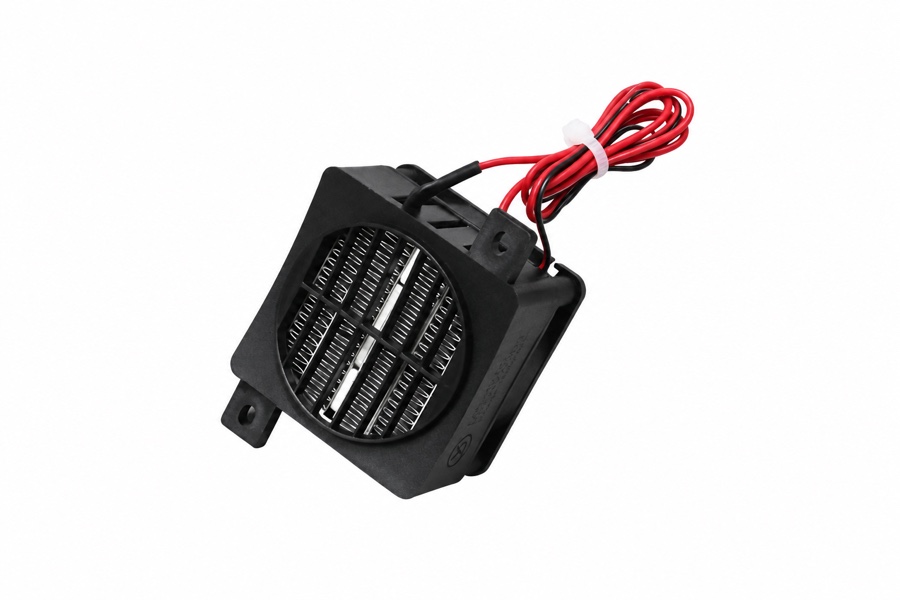
For example, one listed PTC fan heater specification gives a voltage range of 12–220V, a wattage range of 70–400W, dimensions of 87.5 × 60 × 42/52 mm, and a built-in fan for air circulation. Those details are useful for an initial screen. They do not, by themselves, establish that the unit suits a particular chamber, reaches a required setpoint, or fits the final assembly. Keep each detail tied to the product and page scope where it was stated.
When evaluating a 3d printer diy heated chamber, use the same discipline. Do not assume that selecting a heater completes the temperature-control design. On the official 3D printer chamber-heating page, the guidance says that a sensor and controller selected for the printer design are needed for a specified chamber temperature. It also explains that the PTC element helps regulate its own power output but does not measure air temperature around the printed part. Overheat protection should be selected for the final assembly. This is the key real-world anchor for keeping a DIY project’s requirement list separate from a heater’s stated feature.
Keep trade-offs visible
A shortlist becomes more useful when trade-offs remain visible. A compact heater may suit a restricted installation area, while another configuration may better match the required electrical input or airflow arrangement. Avoid turning those possibilities into conclusions unless the evidence covers the specific printer and application. Instead, record what the page confirms and what still depends on the design.
Temperature control is another important boundary. The sensor and controller monitor chamber temperature and adjust heater operation to maintain the required setpoint. That description supports including control hardware in the review. It does not support assuming that every heater package includes the same control components. Ask whether the proposed configuration covers the sensor, controller, and protection elements required by the printer design.
Use the same approach for installation. The page describes a conductive PTC fan heater with a black protective grille, mounting tabs, and red and black wires. These are concrete construction or connection details for that described product. They should be compared with the printer’s mounting method and electrical design, without extending them to models or assemblies that were not described.
Create a repeatable decision record
Before requesting a quotation or selecting a candidate, turn the screening notes into a short design brief. State the target material, recommended chamber temperature, chamber volume, minimum ambient temperature, insulation condition, airflow needs, warm-up requirement, supply voltage, and available installation space. Include the printer design limits and the required control and protection arrangement. This gives a supplier the conditions needed to evaluate a suitable configuration rather than only a requested wattage.
- Record chamber volume, target temperature, ambient temperature, insulation, airflow, heat loss, and warm-up time before comparing wattage.
- Compare the stated voltage, wattage, dimensions, and fan details with the printer’s electrical and installation requirements.
- Include a sensor and controller selected for the printer design when a specified chamber temperature is required.
- Select overheat protection for the final assembly rather than assuming the PTC element measures chamber air temperature.
Then classify each point as stated, derived from the project requirement, or unresolved. A stated point might be a listed voltage range or physical size. A project requirement might be the available mounting space. An unresolved point might be whether the proposed assembly includes the control and overheat-protection elements needed for the final printer. This classification makes the shortlist easier to defend and easier to revise.
Finally, compare candidates only against the same record. Remove any option that fails a confirmed electrical or physical constraint. Keep options with open points in a separate review group rather than presenting them as equivalent choices. A concise, evidence-led record helps technical buyers use PTCYIDU information without confusing product-page details with assumptions about the complete 3D printer chamber system.