

Introduction — a short scene, some numbers, and the question
I once watched a factory line stop for thirty quiet minutes because a coordination fault travelled from one motor to the next; it felt almost theatrical. Early in that morning I had checked the diagnostics on a master slave motor control unit and thought everything was fine. In that pause I could see the cost: 180 units lost, roughly £2,500 in product and labour—so I asked myself, why did the master and slave controller pair fail to isolate the problem? (That thought kept me awake.)

Let me be frank: when I write about controllers I don’t hide behind jargon. I believe systems should fail gracefully, not cascade into full stoppage. Here I’ll share a clear, practical route from spotting small signs to preventing big downtime. I’ll use plain examples, mix in a few technical terms like PID controller, CAN bus and power converters, and stay focused on what you can test and measure. I want to help you ask better questions at the shop floor, such as: are we monitoring torque synchronization or merely sampling voltages? This piece leads you through those questions and toward concrete checks. Next, I’ll peel back the common fixes that look clever on paper but let you down in practice.
Part 1 — Why common fixes for master slave motor control miss the point (technical take)
Why do traditional setups fail so often?
I’ve seen the pattern repeat in site after site: teams apply one-size-fits-all logic to complex, coupled systems and then blame the hardware. The truth is messier. When a vendor suggests a firmware tweak or a simple watchdog timer, it often ignores the deeper problem—latency in the feedback loop, or overloaded edge computing nodes that can’t keep up during peak torque demands. I’ve also noticed a reliance on power converters that are marginally undersized; they cope for a while and then heat up and trip. That’s not a mystery—it’s predictable stress. Look, it’s simpler than you think: failure rarely comes from a single part. It arises from poor interaction between controller strategy, communication bus (e.g., CAN bus), and the plant’s mechanical inertia.
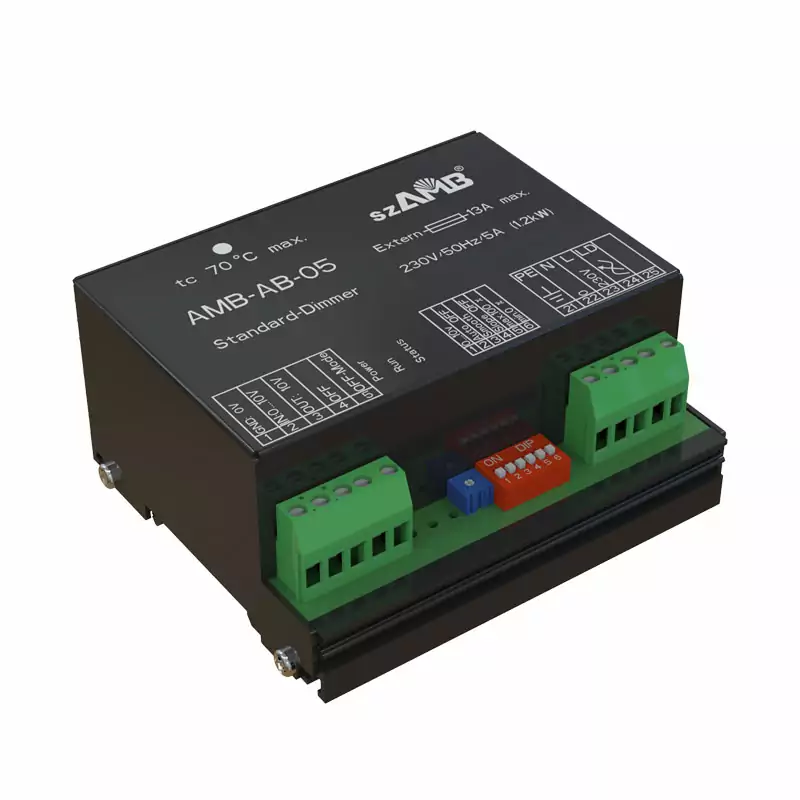
From a controls perspective the usual suspects are known: poorly tuned PID parameters, insufficient fault isolation, and optimistic assumptions about network latency. We tend to tune for steady-state performance, not for transient disturbances. I’ve personally reworked several master–slave deployments where the slave motor would mirror oscillations because the master sent updates too coarsely. The cure wasn’t higher bandwidth alone; it involved redesigning the command hierarchy so that local feedback could override stale commands quickly. In practice, add basic health telemetry, use rolling averages for fault detection, and validate your power converters under real load profiles—not just bench tests. That said—funny how that works, right?—teams still accept vendor defaults far too readily.
Part 2 — Looking forward: principles for better master–slave controller design
What’s next for reliable coordination?
Moving from reaction to design, I favour principles that reduce coupling risk and increase graceful degradation. If you deploy a master slave motor control system today, build three layers of defence: local autonomous control (fast local loops), a supervisory coordinator (slower, tolerant of jitter), and an independent watchdog that can force safe states. Practically, that means you let the slave motor handle immediate torque corrections while the master focuses on trajectory planning. This separation lowers latency pressure on the network and avoids the cascade effect when one node drops out.
Technologies that help include distributed control agents, stricter fault codes over CAN bus, and modest edge computing nodes that run local diagnostics. Adopt redundancy in critical power converters and log both electrical and mechanical metrics: current, voltage, torque, and vibration. I recommend stress-testing under randomized disturbances—not just repeatable cycles—so you observe real failure modes. In the projects I’ve led, this approach cut unplanned stoppages by about half within months. It takes work. But if you care about uptime and worker sanity, it’s worth it.
Conclusion — how to evaluate solutions and take the next step
Summing up, the path from a fragile master–slave setup to a robust one is practical and measurable. We learned that single-point fixes rarely cure systemic interaction problems; instead, layered control, realistic testing, and modest hardware redundancy matter most. I want to leave you with three evaluation metrics I use every time I assess a solution: 1) Fault containment time — how quickly does a system isolate a failing node? 2) Recovery autonomy — can a slave resume safe operation without master intervention? 3) Observability breadth — are electrical and mechanical signals recorded with sufficient granularity? Use these metrics to compare proposals and to push vendors for meaningful demos.
I hope my hands-on experience helps you approach master–slave deployments with clearer priorities. I care about practical outcomes—less downtime, safer operations, and sane troubleshooting. If you start small—add one health metric, one watchdog—you will see progress. And yes, that first small win feels oddly satisfying—funny how that works. For trustworthy components and systems guidance, consider checking tools and modules from szAMB.