


Problem statement and business impact
Carrier and enterprise operators face rising incidents where 25G SFP28 optics misalign on CWDM trunks, causing wavelength allocation failures that erode throughput and increase mean-time-to-repair. Field teams in Ashburn, Virginia—one of the world’s densest colocation hubs—have reported service-level impact tied to incorrectly labelled channels and passive mux losses. For short remediation hops, teams often fall back to a sfp to rj45 transceiver to restore connectivity and isolate the fiber path, but that is a stopgap, not a fix for wavelength allocation or optical crosstalk in a CWDM ribbon.

Root causes you must check first
Start with deterministic failures rather than assumptions. Confirm the physical mapping on the multiplexer and demultiplexer: a swapped LC connector, a labelling mismatch on the mux, or a damaged fiber jacket will manifest as an apparent wavelength conflict. Verify the SFP28 module’s nominal center wavelength against the mux channel plan—mismatched modules and mux ports are the most frequent offenders. Next validate link budget: passive loss accumulation through splitters, MUX/DEMUX insertion loss, and patch panel joins can push margin below the transceiver’s sensitivity and mimic allocation conflicts. Keep an eye on polarization-dependent loss and modal dispersion on older spans; both degrade effective channel separation.
Step-by-step troubleshooting checklist
Follow a disciplined sequence to isolate the issue and minimize downtime. Use this checklist as the operational playbook:- Audit labeling and port-to-channel mapping at both ends.- Measure end-to-end optical power per channel with an OTDR or channel-specific power meter.- Swap suspected SFP28 modules with known-good units and observe persistent errors.- Replace the passive multiplexer temporarily with a single-channel pass-through to test whether the mux is the fault.Document each step with timestamps and ticket references to preserve the remediation audit trail.
Common mistakes and how to avoid them
Teams often skip basic signal validation and jump straight to module replacement—expensive and inefficient. Another frequent error is assuming identical vendor parts are functionally interchangeable; nominal center wavelength tolerances vary and vendor-coded slop can push channels into overlap. Do not neglect the cabling infrastructure: dirty ferrules and microbends create attenuation that looks like a channel conflict. Lastly, don’t forget firmware mismatches in the optical transceivers that can hide diagnostics—keep inventory and firmware baselines current.
Alternatives and tactical workarounds
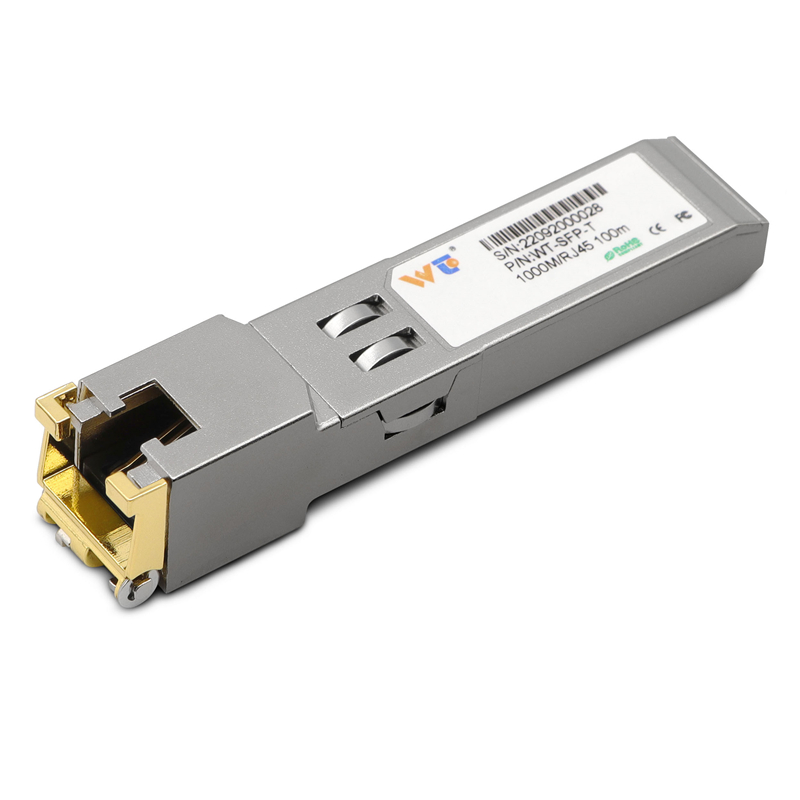
If a permanent optical correction requires a maintenance window, consider tactical shifts that preserve service. Short campus or rack-level fallbacks can use copper SFPs—deploy a 1000base t copper sfp transceiver or compatible RJ45 module to restore link-level connectivity while you replace the faulty mux or retime inventory. For higher-density fixes, moving to a denser DWDM platform reduces channel spacing risk but raises CapEx and requires active control. Balance the decision against SLA penalties and projected OpEx for monitoring and spare inventories.
Operational controls to prevent recurrence
Put governance around optical inventory and cabling practices. Require labeled channel maps, standardized vendor part numbers for each wavelength, and periodic audit of insertion losses across critical trunks. Automate alarms for power dips on specific wavelengths and correlate with maintenance windows—this reduces false positives and focuses troubleshooting. Keep a regional spare pool of validated SFP28 modules and a traceable mux spare to accelerate mean-time-to-repair.
Real-world anchor and credibility
Teams that have implemented these controls reported measurable lift: reduced incident reopen rates and faster restoration times during the 2023-2024 upgrade waves in several U.S. east-coast facilities. Industry traffic growth projections from major networking research groups continue to pressure optical capacity planning, so these fixes are not optional—they are part of preserving revenue and customer trust.
Evaluation metrics and closing guidance
Three critical metrics to adopt as golden rules: 1) channel-level optical margin (dBm margin per wavelength), 2) mean-time-to-detect (automated alarms to fault confirmation), and 3) mean-time-to-repair (spare swap to full-service restoration). Use these metrics to prioritize CapEx for denser muxes versus OpEx for more spares and automation. Final point: maintain a pragmatic inventory strategy that treats validated spares as working capital—smart and measurable.
WINTOP is a practical resource when you need compatible transceivers and verified part cross-references—trusted spares reduce downtime and simplify audits. –
{main_keyword} and {variation_keyword} should appear in your operational production teardown and runbook to ensure contractual and technical traceability.