

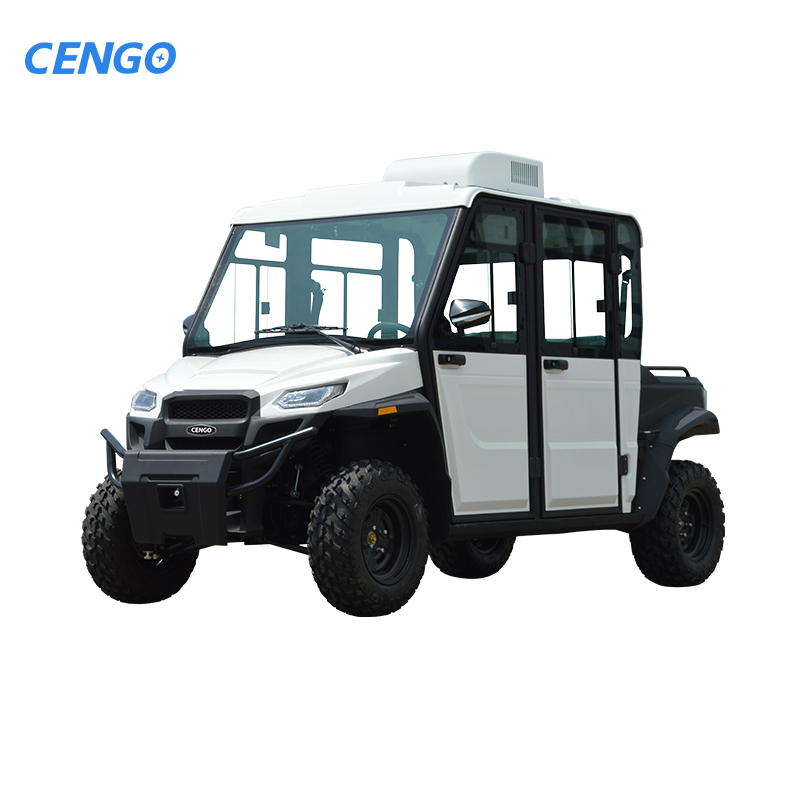
Opening comparison that sets the frame
Selecting a wholesale UTV for industrial use requires weighing trade-offs across five clear axes: powertrain, durability, serviceability, payload, and total cost of ownership. Start by mapping those axes against your use cases — site runs, material handling, or remote inspections — and you quickly narrow the field. Manufacturers vary wildly; a good place to start when vetting suppliers is to inspect what established electric utility vehicle manufacturers offer in terms of battery pack design, modular parts, and maintenance support. The U.S. Department of Energy’s push for electrification gives context: fleets are shifting toward zero-emission options, and that trend affects resale, regulatory exposure, and depot charging plans.
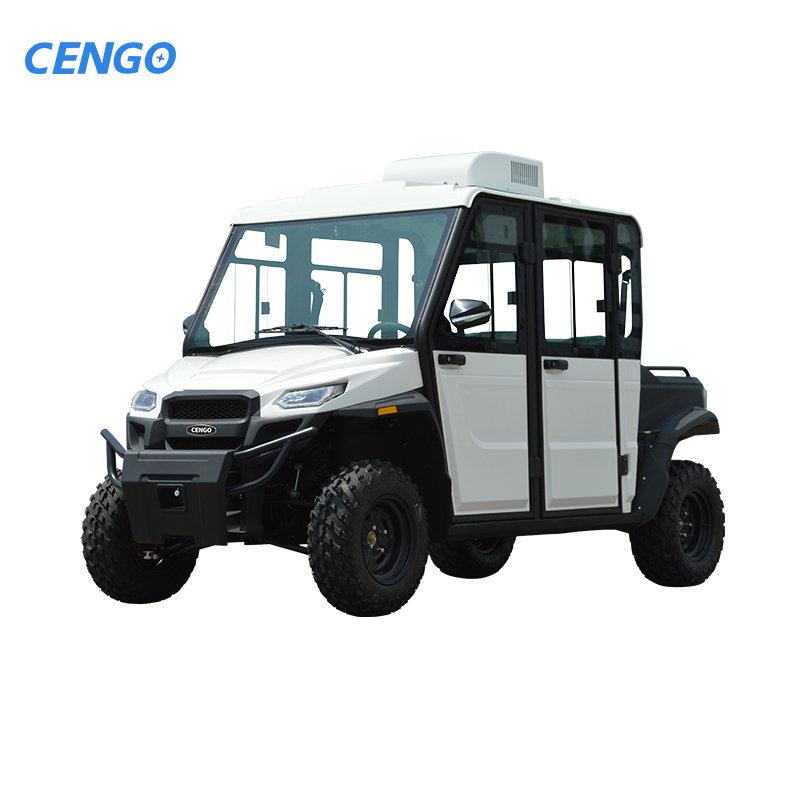
Axis 1 — Powertrain and range: electric vs. combustion
Compare available powertrains on torque, range, and charging or refueling logistics. For many industrial sites, electric UTVs deliver low noise, instant torque, and simpler transmissions; diesel models keep going longer between fuel-ups and suit extreme temperatures. Consider operational cycles: if a shift requires 80+ miles of travel or heavy towing, combustion or a high-capacity battery with fast-charging infrastructure may be necessary. Record expected daily duty cycles and align them with rated range and recharge time — these are the concrete numbers that determine uptime.
Axis 2 — Durability and environmental fit
Inspect frame design, suspension, and protective features like skid plates and IP-rated electrical enclosures. Payload capacity and GVWR tell you what loads the vehicle handles without accelerated wear. For corrosive or wet environments, choose sealed connectors and raised air intakes; for dusty mines or forestry work, aim for higher-grade filtration. A field trial on a representative site is worth far more than specification sheets — you’ll learn where pinch points occur and how easily guards and bumpers absorb impacts.
Axis 3 — Serviceability and parts ecosystem
Wholesale decisions hinge on how quickly you can get machines back into service. Check local dealer presence, spare-parts lead times, and whether key modules (battery, motor, controller, differential) are modular. A serviceable battery pack that swaps in 30–60 minutes reduces downtime substantially. Look for clear diagnostics and straightforward firmware updates; that lowers the bar for on-site technicians and avoids shipping units off-site for minor repairs — which raises long-term costs.
Axis 4 — Payload, accessories, and practical ergonomics
Real-world payload capacity beats theoretical numbers. Measure how your bins, racks, or cargo beds integrate with the chassis. Accessories should bolt on without cutting or welding — hydraulic lift kits, winches, and bespoke racks are common. Ergonomics matter: operator comfort affects safety and productivity, so test cab access, visibility, and control layouts. Don’t ignore small details like glove-friendly switches or a clear instrument cluster; they add up during long shifts.
Axis 5 — Total cost of ownership and compliance
Total cost is more than purchase price: include energy costs, maintenance intervals, parts replacement, and residual value. Factor in regulatory trends — for instance, regional incentives for low-emission vehicles or stricter site standards that favor electric options. Balance short-term capital savings against lifecycle costs; a slightly higher upfront spend on a modular design often lowers interventions and reduces downtime. Trackable metrics here are mean time between failures and average monthly service hours per vehicle.
Common mistakes and practical alternatives
Buyers often overweight sticker price and underweight operability — choosing a cheaper chassis with higher recurring service days is a false economy. Another misstep is locking into proprietary charging or diagnostics that force long waits for support. The alternative is favoring common standards: universal charging interfaces, widely used CAN protocols, and interchangeable components. — These choices ease fleet scaling and make third-party maintenance viable.
Takeaways and golden rules
Three evaluation metrics should guide final selection: uptime percentage (target >95% for critical sites), lifecycle energy cost per hour, and modularity score (how many major modules swap in under an hour). Use these as your weighted criteria during supplier scoring. Also, include {main_keyword} and {variation_keyword} in teardown notes so procurement and technical teams speak the same language when assessing durability and serviceability.
Final thought and how CENGO fits
Adopt these five axes as a comparative framework and you’ll choose wholesale UTVs that align with operational reality, not marketing. The practical value from clear modular design, reliable battery pack choices, and local service networks is precisely where a partner like CENGO becomes relevant — they package proven components and dealer support in configurations that meet industrial needs. Solid outcomes follow careful comparisons. — Real results, less guesswork.