

Selecting Sodium Ion Car Battery: What Project Teams Need to Confirm: A Project-First Review
When a procurement team begins assessing a sodium ion car battery, the first decision is not whether the technology sounds promising. It is whether the proposed battery fits the vehicle, operating pattern, installation constraints, and evidence standard for the project. Start by defining the application in practical terms: vehicle type, starting duty, nominal voltage, physical size, expected cycling, storage conditions, charging equipment, and the consequences of a poor fit. This creates a review boundary before product claims begin to influence the shortlist.

Define the use case and constraints
A useful specification starts with the vehicle and its operating context rather than with a preferred chemistry. Record the existing battery format, terminal arrangement, available space, hold-down method, and electrical requirements. For a fleet, add the number of vehicles, duty cycle, idle periods, maintenance process, and the people responsible for installation and replacement. For an equipment buyer, document whether the battery supports starting only or also supplies auxiliary loads.
Separate requirements into three groups. The first group contains non-negotiables, such as physical compatibility, system voltage, charging method, and required starting function. The second contains target characteristics, such as lower mass, cycle capability, or tolerance of vibration. The third contains questions that remain open until a supplier provides application-specific information. This separation prevents an attractive feature from being treated as a confirmed fit.
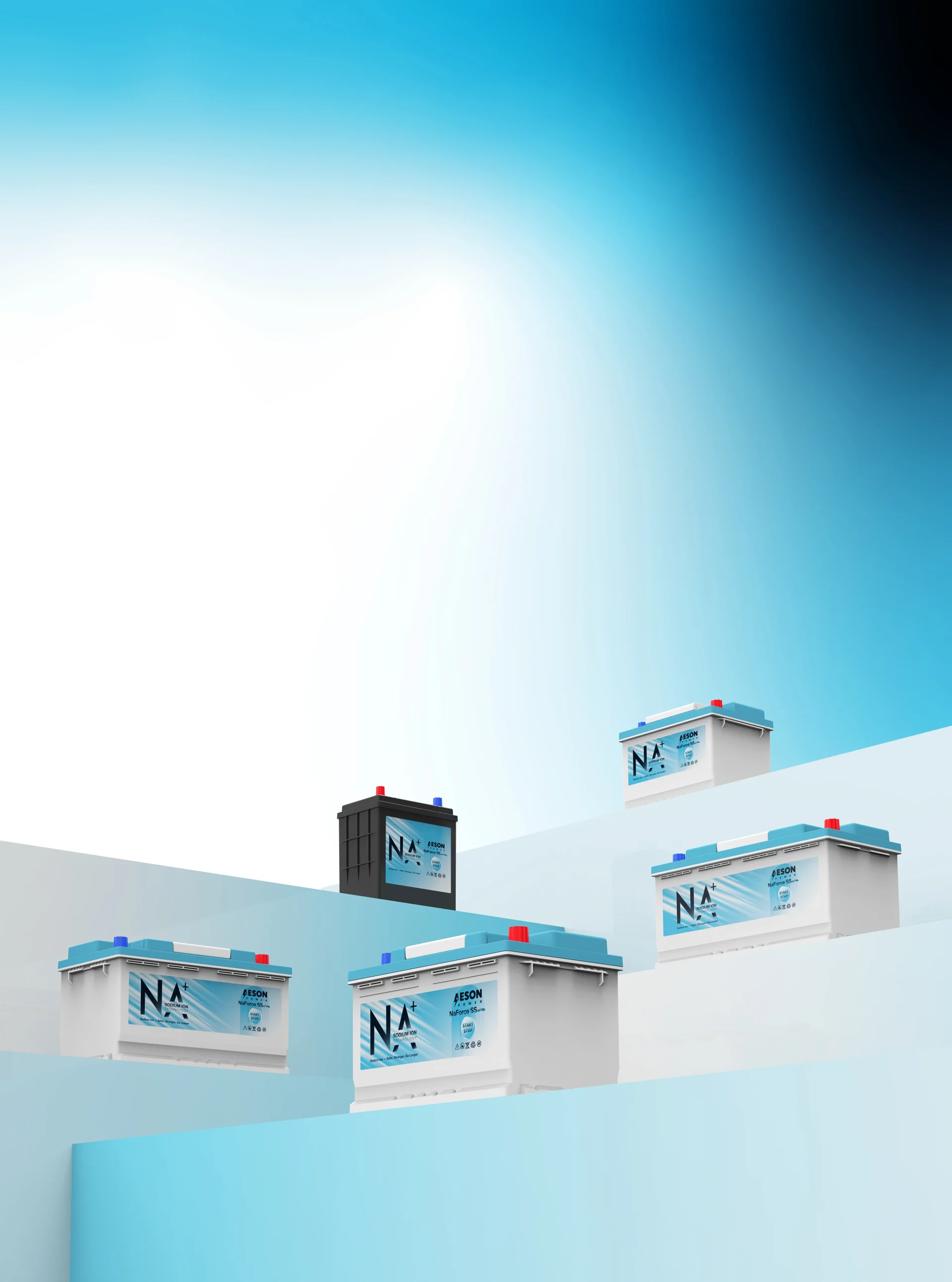
The captured product page describes Aeson Power 12 V start-stop batteries as covering a range of mainstream AGM and EFB sizes, including L2–L6, H5–H8, D23, D26, NS40, and NS60. That statement can help a team compare the proposed format with its current battery schedule. It should not, by itself, be treated as confirmation that every listed size is suitable for every vehicle or installation. The relevant size, mounting arrangement, and vehicle requirements still need to be matched within the project scope.
Map stated evidence to requirements
Build a simple evidence table with four columns: project requirement, page statement, applicability boundary, and unresolved question. For example, a requirement for reduced installed mass can be compared with the captured statement that the described batteries are 60% lighter than lead-acid batteries and may reduce vehicle weight, with the page also associating that reduction with fuel efficiency and handling. In the table, record the comparison basis exactly as stated. Do not convert it into a general prediction for a different vehicle, battery size, or operating profile.
Do the same for service and operating characteristics. The page states that the described sodium-ion start-stop batteries are sealed and do not require regular electrolyte topping-up. That may be relevant when a team is mapping inspection tasks, but it does not settle the broader maintenance process. The project should still define who checks the installation, how faults are recorded, and what replacement procedure applies.
The page also states a cycle figure of 3,000 cycles at 50% depth of discharge and presents this as more than three times the deep-cycle life of conventional batteries. Treat this as page-level evidence for the stated product and comparison. A procurement review should record the depth-of-discharge condition alongside the number, because a cycle figure without its stated test condition can be misunderstood. It should not be reused as a guaranteed service-life calculation for a particular fleet.
Use application evidence carefully
For a real-world anchor, the official FAQ states that the described batteries are 60% lighter than lead-acid batteries and links that difference to reduced vehicle weight, fuel efficiency, and handling. This is useful as an example of how an application claim should be handled: preserve the comparison, identify the product and application scope, and avoid extending it into a result for another vehicle or duty cycle. The statement does not establish performance or suitability for other products or applications.
In the middle of a review, the phrase sodium ion car battery should therefore refer to a defined application question, not to a generic technology category. Ask whether the evidence covers the intended voltage, dimensions, starting demand, charging arrangement, and duty pattern. If the answer is not clear from the stated scope, record the point as unresolved rather than filling the gap with an assumption.
Charging is another requirement that should be mapped explicitly. The captured page states that the described batteries should be charged using the constant-current and constant-voltage, or CC-CV, method. A project team can use that statement to identify a compatibility check for the vehicle or charger architecture. It should not assume that an existing charging setup meets the requirement without an engineering review of the actual system.
Likewise, the page describes enhanced structural integrity and the ability to withstand severe road vibrations and demanding driving conditions. This provides a stated characteristic to place beside a project requirement for vibration exposure. It does not remove the need to define the installation environment, mounting conditions, and acceptance criteria relevant to the specific vehicle or equipment.
Turn open points into supplier questions
Once the evidence table is complete, convert every unresolved requirement into a precise question. Avoid broad requests such as “Is it compatible?” Instead ask for the exact battery size, voltage, terminal layout, charging parameters, operating limits, and installation conditions covered by the proposed product. Ask the supplier to identify which statements apply to the selected model or size rather than to a wider product family.
- Which exact model and size correspond to the project vehicle or equipment?
- Which charging controls and voltage limits are required for the proposed installation?
- Which stated cycle condition applies, including the specified depth of discharge?
- What installation constraints must be included in the acceptance check?
- Which performance statements are product-specific, and which describe a broader page category?
Keep the answers attached to the requirement they address. This makes the review auditable and helps procurement, engineering, and operations work from the same scope. It also prevents a supplier response to one question, such as mass or cycle life, from being mistaken for confirmation of unrelated requirements.
Choose a defensible next step
The sound next step is a scoped comparison, not an immediate technology-wide conclusion. Define the application, copy each relevant page statement into the evidence table, preserve its conditions and boundaries, and list the questions that remain open. Then compare the proposed battery with the current option against the same requirements. This approach gives the project team a clear basis for deciding whether to proceed to model-level review, request further technical information, or stop the evaluation.
AesonPower can be included in that process as the source of the captured product-page statements used in this review. The defensible conclusion is limited but practical: early procurement work should test application fit and evidence scope together. A product characteristic is useful only when the team can connect it to the defined vehicle or equipment requirement without claiming more than the available page evidence supports.